Genre-Wise: NOLA Sludge
By Jakub Brzozowski
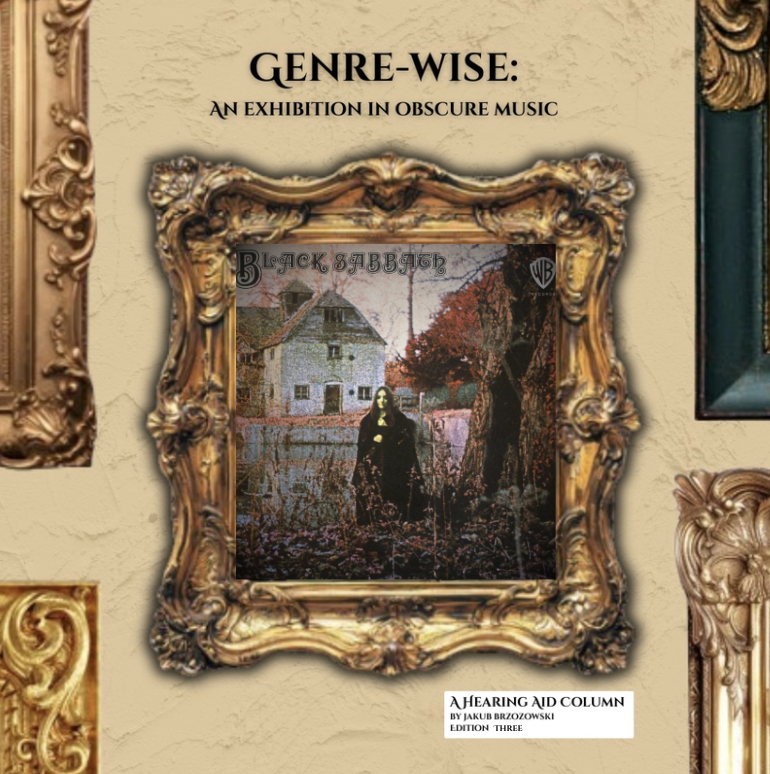
Hello dear readers and welcome to my column! I am your columnist, guide and the custodian of (almost) forgotten music. This column is a trip to the museum of sounds that have somewhat obscured over the years, due to their niche and inaccessible nature. No worries, however, since your curator is here to shed some light on the darker corners of the annals of music. The agenda is simple: one trip (column article) = one subgenre that has vanished from the collective memory of music nerds. Among the Louisiana swamps, in the Bayou’s notorious capital – New Orleans – a new form of metal became a fixture. Through the 1990s and early 2000s, New Orleans produced a rather unique form of metal, dubbed sludge metal. Inspired by the chaotic hardcore of the 80s, the then nascent doom metal scene, and harshness of the (now) classic noise rock, the concoction produced the (logical) outgrowth of punk and metal known as sludge metal. Its most recognised and critical scene being NOLA Sludge.
---
The article draws upon J.J. Anselmi’s book “Doomed to Fail: The Incredibly Loud History of Doom, Sludge, and Post Metal” and a good number of quotes and trivia presented here are derived from said book.
Let’s start at the very beginning: 1970, Birmingham, England. This is where an ex bluesy jam band Black Sabbath created heavy metal. But aside from that, their pioneering style earned one more name: doom metal. The crawling, heavily-distorted riffs, which were begotten as a result of the bands’ guitarist, Tony Iommi’s injury in a factory, where he lost two fingers. Hence he simplified his riff-craft and hence made it heavier with the help of distortion pedals and proper amplification, which resulted in the birth of the metal riff.
Crucially for this article, future metal bands did not only take cues from the latter half of ‘Electric Funeral’, ‘After Forever’, or ‘Children of the Grave’, but also from songs such as ‘Hand of Doom’, or the final riff in ‘Sabbath Bloody Sabbath’ and started slowing their music and tuning their guitars lower. In particular: Pentagram added a sinister occult edge, Witchfinder General contributed the heavy-metal-like imaginativeness, Pagan Altar enriched it ritualistic atmosphere and dramaturgy, and Candlemass who perfected what Pagan Altar started, laying ground for more melodic epic doom metal to come.
Nonetheless, it wasn’t European (or sub-culturally metal, for that matter) bands that paved the way for sludge metal. In my opinion, the doom metal bands, which most directly contributed to the advent of sludge are: Saint Vitus and Trouble. Both of these acts were created by punks that wanted to play in the style of Black Sabbath. They hadn’t yet, however, infused both styles, but recreated the Sabbathian atmosphere, while naturally their hardcore roughness percolated the music.
The first punk act to openly acknowledge the undisputed influence that the quartet from Birmingham had on all heavy music was Black Flag. In particular, the B Side of their landmark 1984 album My War is oftentimes considered the advent of sludge metal. While their 1981 masterpiece Damaged can be deemed as the ideal encapsulation of the unstoppable energy of the early 1980s hardcore, its successor, My War, charted a pathway for the hardcore scene’s experimentation going forward. Its latter half was played at agonisingly slow tempos, which were insufferable for punks at that time. In general, both within the metal and punk scene the following equality almost always held: faster = heavier. Black Flag became the signpost for other punk-adjacent bands to slow their hardcore down and pad it out with some Sabbathian riffs.
Concurrently, it’s worth mentioning noise rock’s influence over the development of sludge metal. It wasn’t punk or metal acts, but rather artists hailing from the no wave scene, such as Glen Branca, Swans, (early) Sonic Youth, and the scene adjacent band The Birthday Party, who were focused on creating as much noise with their guitars as possible for that era. One band, from coastal Washington, in particular welded all of the influences listed above – Melvins. Specifically, their initial run from 1987’s Gluey Porch Treatment, up to 1991’s proto-drone-metal masterpiece Lysol proved to be very influential on the then-forming sludge metal underground, a strata of whom congregated in the capital of Louisiana.
While writing this article I tried posing the awkward question: “But why New Orleans?” Indeed, I found this matter confounding for a long time. After all, apart from the estimable traditions of blues and jazz, not much was happening musically in New Orleans during the latter half of the 20th century. I found the answer, while watching Noisey’s exhaustive documentary on NOLA Sludge – a vigorously-functioning hardcore / crossover scene preceded the sludge scene itself. The best known band to hail from that early scene has almost nothing to do with sludge, apart from their insatiable groove: Exhorder. What their emphasis on the rhythm reveals is how the scene got transformed by the aforementioned sludge pioneers: Melvins. That time was also the training ground for the scene’s legend, the mastermind behind Crowbar and a riff-provider for the scene’s own supergroup Down (more on both later!) – Kirk Windstein. However, the Melvins’ influence started de facto spreading when three young punks got together and started a band, which was to “be a hardcore band, that sounds like Sabbath”. In 1989 Mike IX Williams (vocals), Jimmy Bower (guitar), and Joey LaCaze (drums) got together to form Eyehategod.
Eyehategod is generally acknowledged as the seminal act to hail from the New Orleans Sludge Metal scene. Their music is a one-of-a-kind combination of doom metal, hardcore punk, and noise rock with hints of blues. As their musical influences Jimmy Bower named: “Swans, Chrome, SPK, Melvins and all that shit.” I myself would also indicate the low-hanging fruit of Black Sabbath and Black Flag, and influential noise rock acts such as The Birthday Party, Flipper, Scratch Acid, Unsane, Big Black and Rapeman. EHG’s members claim that the blues in their music was derived directly from Delta bluesmen, such as Robert Johnson. They clearly also inherited it from rock and metal music (The Gun Club particularly comes to mind) they listened to, which was itself devastatingly indebted to the blues.
More often than not, their songs consist of a primitive, yet infectiously groovy bassline upon which blistering drums pile in along with noisy primal guitar riffs, that sometimes can sound closer to a Neanderthal banging a bludgeon against a cave’s wall, than a guitarist playing an abrasive outgrowth of metal in the 1990s. In a similar vein, the aforementioned drumming is unapologetically groovy – the band repeats the same riff over and over again, as if they want to drill it into your cortex. Nevertheless, the ever-evolving drum arrangements provide a sense of novelty, which makes you want to loop certain sections of their numbers without end.
The fusion between the advancing hardcore tempos of Black Flag with Sabbathian stomping riffs even earned itself a special name amongst the band members. The bands’ guitarist Bower refers to them as “bends”: “You know, we play in one tempo, and then we slow down and this makes knees bend.” This is one of the reasons I find Eyehategod so appealing: the music’s raw quality lifted straight from the hardcore ethos relishes perfectly in tremendously heavy riffs, which have an intrusive quality of making you headbang instantly.
I also have developed my very own term to describe a distinct Eyehategod riff. Quite uninventively I dubbed them: “the Eyehategod breakdowns.” I specifically refer to those riffs, which consist of chugging the lowest open string, usually in quarter notes with absolutely no syncopation or any sort of rhythmic flourish. If that didn’t make any sense, then imagine just playing one note slowly and steadily. That’s it. No more, no less. Most of the other bands which include breakdowns within their songs, endeavour to nuance them by including syncopation, off-kilter rhythms, unexpected shifts, or their breakdowns don’t consist of simply just one note. Eyehategod opts for crude simplicity, and utter primitivity. To experience it yourself put on ‘Blank’, ‘Depress’, ‘Run It Into The Ground’, or ‘Take As Needed For Pain’ and listen intently what simple means of expression are needed to create a fully-fledged, skull-crushing riff.
While discussing Eyehategod as a band one divisive topic cannot be omitted. Due to Mike IX Williams’ vocal delivery, which is closer to a hyena’s tortured growling rather than a human’s screams, it is typically quite difficult to make out what the lyrics actually are. It’s unsurprising then that the lyrical content is equally arduous, but true to the band members’ difficult life experiences. This, however, does not explain song titles such as ‘Sister … (Pt. 1 /2)’ or ‘White …’ (you can google these at your own discretion), or equally hideous lyrics, which won’t be quoted here for obvious reasons. Even if the latter song’s title was subsequently changed to “White Neighbour” and supposedly describes the band members themselves, as cultural appropriators, as well as is a manifestation of the crew’s morbid sense of humour (as Jimmy Bower asserted) this does not excuse such behaviour. Yet again, I’d prefer not to discuss the separability of the art from the artist, but I do feel disconnected enough from the issues of the state of Louisiana to be able to appreciate Eyehategod solely for their musical craft.
On the other hand, I’d consider Crowbar, another essential act from the scene, to be the archetype for the more generic crowd of sludge metal bands that followed in the steps of the pioneers from the 1990s. This is absolutely not intended as a criticism of Crowbar’s music. I merely wanted to point out that they are the blueprint sludge band. In other words, their style is unmistakable, but easy to copy. Unlike other acts from the scene, Kirk Windstein’s ensemble doesn’t import much blues into their music. What they are really concerned about is writing the heaviest riffs ever known to man, which don’t come off as posturing or flashy. What is meant by that is that in spite of the undeniable heaviness of their music, it never feels too hostile, or gives an impression that the band members were doing anything in their capabilities to sound offensive.
Similarly to their slow, heavy sound, Crowbar’s lyrics almost always deal with personal anguish, mental suffering and in general come from a mentally dark place, perfectly reflecting the music’s unadulterated, high-octane brutality. However, my issue with it is that because all of them are so devoted to this one specific subject matter, that their songs stop being unique and start sounding homogenous. Don’t get me wrong, Windstein’s agonizing screams perfectly capture the dread that is contained within the lyrics, the problem lies in that the sheer amount of similarities in their lyricism and use of repeated imagery can lead to overstimulation. Hence, these lyrics lose their initial punch. But I’d also be lying to you, if I claimed that classics, such as ‘All I Had I Gave’, ‘Planets Collide’, or ‘Existence Is Punishment’, don’t hit me where they should. Because they still do.
The most morbid act of the scene, that would undoubtedly earn a “bunch of local freaks” scene badge (if such existed), is Acid Bath. They’re also the most mythologised NOLA sludge group, due to their quick dissolution in 1997 following the tragic death of their bassist – Audie Pirt. The second factor that earned them their legendary status is that their debut album cover art was painted by John Wayne Gacy – a serial killer. If that wasn’t enough to prove that Acid Bath is an unconventional band (to say the least), then let me inform you that they come from the city of Houma, located deep within the Bayou. So yes, to top all of that they were isolated geographically from the rest of their scene, and lived in the middle of a marshland.
Their music perfectly encapsulates this unusual (for a metal band) background and retains the shamanic aura that seems to permeate the area. The music itself has a very ritualistic feeling, being heavily inspired by blues and southern rock, but with a morbid local-mythology-inspired twist. On par with that and (obviously) the sludge metal aspect, the band takes influence from the rawness of black and death metal acts, such as Darkthrone and Incantation respectively, mixes them with Alice in Chains-like dual vocal harmonies and sprinkles on top with goth rock and industrial metal elements. Such a concoction is truly one of a kind and that combined with lyrics inspired by serial killers, narcotics abuse, mental illness, and sarcastic dark humour among others spawned two legendary records: When the Kite String Pops (1994), and Paegan Terrorism Tactics (1996). If you’re still unconvinced, then look at their debut album’s cover art, which mind you was painted by a serial killer, and try telling me you’re not fascinated by what music it could represent.
Down is probably the most accessible band from the scene and functions as an excellent point of entry to the world of New Orleans sludge. This is the case, because Down is in fact a supergroup – led by Pantera’s notorious frontman: Phil Anselmo. In addition to his piercing screams and harsh shrieks, the groovy drumming is provided by EHG’s guitarist Jimmy Bower, the relentless riffage is courtesy of Crowbar’s frontman (Kirk Windstein) and Corrosion of Conformity’s vocalist , whereas the rhythm section was completed (over the years) by two respective Crowbar bassists – Tod Strange, and Pat Bruders. As Philipp, himself, remarks: “This scene is so incestuous, man.” Indeed.
Their music is as close as it gets to a sludge metal jam band. This aspect is best understood when knowing the context of the project’s formation – during Christmas holiday in 1994 when all these musicians returned to New Orleans after a relentless year of touring, they decided to collectively improvise and let the new music flow. What sprung from it was a heavily blues-infused take on sludge metal with elements of Southern rock. All of that is to be found on their debut album: NOLA (1995). This atypical combination of influences is best exemplified by the variety of the tracks themselves. Monstrous songs like: ‘Temptation’s Wings’, ‘Bury Me In Smoke’, and ‘Pillars of Eternity’ are masterfully contrasted with gentle sorrowful ballads, such as ‘Jail’, and the album’s biggest hit – ‘Stone the Crow’. In addition to that, the collective released two follow-up records, which follow in the steps of their debut and don’t really expand the formula.
Down’s lyrical subject matter is the typical for this genre mixture of harsh facts of life, substance abuse issues, and more ingeniously the American South. In particular, ‘The Eyes of the South’ of off NOLA deals with a highly contradictory relationship to Anselmo’s Louisiana (and The South overall). On the other hand, ‘Hail the Leaf’ from the same album treats substance abuse matter-of-factly, instead of resorting to praising THC like many (musically) kindred stoner metal bands: “Sixth hour, Fail to rise, And I cower, In reality's eyes, So I just smoke.”
Moreover, Down along with Crowbar are also responsible for establishing a clear visual identification for the scene. These two bands directly represent New Orleans by emblazoning their albums and merch with fleurs-de-lis, lily-like shapes present on New Orleans’ flag. Finally, Down is also the group that popularised the use of the acronym NOLA in relation to the scene, by using it in two of their albums’ titles.
Apart from these key bands there are three other noteworthy side-projects, which could be considered as belonging to the scene: Soilent Green, Superjoint Ritual, and Shrüm. Soilent Green is the brainchild of Eyehategod’s guitarist – Brian Patton. The band is grounded within the sludge metal paradigm, but distinguishes their music by adding elements of grindcore (deathgrind particularly). Superjoint Ritual is another Phillip Anselmo-centred ensemble, featuring familiar faces (Jimmy Bower from EHG). Their music is a callback to the earlier-prevalent New Orleans’ hardcore scene, as it combines the typical slow sludge affair with faster tempos of hardcore punk. Shrüm is the last artistic output Acid Bath’s late Audie Pitre blessed this world with. This project contains the whole classic Acid Bath lineup, apart from Jimmy Kyle (the drummer). This is because Shrüm leans heavily on Godflesh influences and those cannot be properly executed without a drum machine. Overall, this is harsher, more experimental, and stripped of the grunge / gothic influences version of Acid Bath.
NOLA Sludge’s influence over the whole sludge/stoner/doom metal scene is unprecedented. Every single band operating within that scene left its massive imprint on the future of this music. Eyehategod inspired successors such as Primitive Man, The Body, and Indian to slow the music even further down and make it ever harsher and more down-tuned. Crowbar is basically the paragon sludge metal band. Down’s impact on the bands forming the flourishing stoner metal scene in the 2000s cannot be overestimated. They also helped to give spotlight to more overlooked acts from the 1990s, and gave mainstream exposure to an offshoot subgenre known as Southern metal. Finally, Acid Bath’s music became a lighthouse point for all the freaks, who wanted to express their innermost bleakness on the lyrical canvas, within extreme metal, without necessarily resorting to death metal’s gory grotesque, or black metal’s satanic imagery. All in all, if one wishes to explore the slower styles of metal, but has little patience for fantasy themes and epicness of (traditional) doom metal, or the crude herbalist imagery of stoner metal, then I’d recommend starting with sludge metal. And what better signpost is there than a small, highly varied, and insanely distinct scene of NOLA Sludge?