Genre-Wise: The Fort Thunder Scene
By Jakub Brzozowski
Hello dear readers and welcome to my column! I am your columnist, guide and the custodian of (almost) forgotten music. This column is a trip to the museum of sounds that have somewhat obscured over the years, due to their niche and inaccessible nature. No worries, however, since your curator is here to shed some light on the darker corners of the annals of music. The agenda is simple: one trip (column article) = one subgenre that has vanished from the collective memory of music nerds. This time, we will switch the gears a bit – instead of foraying into prog oddities, I will prove to you that this column features diverse music (well beyond the 70s), and we’ll spring right into the grimy warehouse in the city of Providence, Rhode Island. There, amongst decay and unrealised expectations of pre-Civil War industrial grandeur, a one-of-a-kind music scene was thriving in late 90s and early 00s – today’s the one for the Fort Thunder Scene.
The last two columns focused on subgenres concentrated around one thing: one festival, one band – this time we’ll take a leap into a scene concentrated on one venue – a defunct warehouse on the outskirts of Providence’s Olneyville. What remains a bonding agent between the subgenres I’m describing is the participating bands’ focus and commitment to a particular type of sound: in Fort Thunder’s case it’s noise and alike.
Let’s start with a quick history of the venue itself. Before becoming a space for local artists to pursue their craft, Fort Thunder was a textile factory located in the Western part of Providence, more specifically, the aforementioned Olneyville district. Time was cruel to the mill and so in the 90s the building was nothing more than a derelict, godforsaken warehouse in the poorest and underpopulated area of the city. Whoever owned the place was clearly uninterested in having anything to do with maintaining it.
As a result it became squatted by students of the Rhode Island School of Design, who started living and creating there. The two most important figures in that collective were: Brian Chippendale (of Lightning Bolt, Black Pus, and Mindflayer) and Mat Brinkman (Forcefield and Mindflayer). It was them, who transformed the space into a full on art commune, kickstarting the scene around 1995. The idea of the scene was to create a space where local musicians and graphic artists would be able to live and exhibit their art, so that others might enjoy it too. A new locator would just get briefed: “There are no rules except for one... you can make as much noise as you want, any time of the day, and you can’t object to that.” This mindset wasn’t too far detached from the undeniably punk mindset of squat dwelling, where the music is the main vector of existence.
In years 1995-2002 the space was filled with: “punk shows, experimentation, art display, hangouts, parties, and workshops in a neglected warehouse that was turned upside down.” That being said, some argue that the Fort Thunder scene was artistically lacking, with its greatest appeal being that it allowed wealthy RISD students to feel connected to something “cool” and “authentic.” While there is a degree of absurdity and privilege in students from a prestigious art college starting a squat in Providence’s poorest neighbourhood, this does not mean there is no artistic value produced by the bands themselves. I’d prefer not to get into the argument of the justifiability of separating the art from the artist yet again, but writing this article in a town across the Atlantic, 24 years after the shutting of the venue (the de facto end of the scene) and having no personal connection to any person associated with that scene, gives me the confidence to say that I appreciate Fort Thunder’s output based on their artistry, rather than any supposed “white hipster” drive towards the next coolest thing. And so can be said by anyone genuinely valuing the collective’s output.
Now onto the music itself – the core of the scene was centred around a handful of bands: Lightning Bolt, Mindflayer, and Forcefield. Lightning Bolt is undoubtedly the best known (and my favourite) band of the scene. They are just a duo of the rhythm section: bass and drums. Nonetheless, they play in such a hectic manner (especially on the drums) with an ultra-tight, odd-time signature heavy performance, it feels like a complete rock band is behind these sounds. They focus on repeating these mind-bendingly complex phrases with complete synchronisation between the bass and the drums, making the rhythm the omnipotent driver of the music. Atop that are shouted vocals (provided by the band’s drummer – Brian Chippendele) and sheets of noise and psychedelic textures generated by both of the members to augment the already neurotic experience.. Genre-wise (no pun intended) this has earned them the label of brutal prog, but noise rock, post-hardcore or math rock all suit their music equally well. The hardcore ethos is especially visible in the band’s live performance philosophy. True to the HC tradition, all their shows were played in a “guerilla” way. In other words, they play right on the floor – there is no stage at their gigs. You can stand right beside the drum kit and admire the chaos that takes place on the cymbals, or experience sonic overwhelm nearby Brian Gibson’s bass rig.
Mindflayer is far less chaotic than Lightning Bolt, but similar in style. This band features the two main figures of the scene: Brian Chippendale (as in Lightning Bolt) on the drums, and Mat Brinkmann on various electronics, which can be broadly called noise rigs. To my mind their music is a very abstract take on breakcore and other forms of hardcore techno, where we have real drums, instead of programmed percussion. Similar to extreme techno, there are also rhythmic sheets of noise to fill the space with textures rather than the purely rhythmic drive. Other noticeable traces of inspiration would be krautrock (particularly it’s motorik pulsating beat), noise rock (of course), other forms of noise music (particularly power electronics and power noise), and synth punk (Suicide style, though far less minimal).
Unlike Mindflayer and Lightning Bolt, Forcefield were an altogether electronic band. However, their main agenda was psychedelia, but not in an Animal Collective sense, where the acidity of the music is floaty and vaporous. Here, the listeners were meant to be consumed by the psychedelic atmosphere – both visually and sonically. The performances included the use of “multi-colored seizure-inducing outfits, while using various light structures and set props to create a total experience.” Similarly, the music could retroactively be described as power noise, acid techno, plunderphonics with a strong dosage of psychedelia and everything in between.
Additionally, the scene hosted guest performances from nowadays legendary Japanese noise rock acts like Boredoms, melt-banana, or Ruins (who also dabbled in zeuhl). It is quite clear that those bands that got invited to play in the venue were direct influences on the music of the loft itself (for example Boredoms is a clear inspiration for Lightning Bolt). The aforementioned Japanese acts are very close to the music of Fort Thunder, chaos and noise being the two main artistic means employed by all of these musicians. In particular, Ruins and locals from Lightning Bolt cannot be omitted when discussing the subgenre known as brutal prog. Other regulars to the venue included noise rock acts like: Six Finger Satellite and Arab on Radar, as well as powerviolence legends Dropdead (also hailing from Providence). These bands also employed noise as the driving force in their music. Nonetheless these bands can’t really be categorised as “Thundercore” without a more specific description, since the scene wasn’t completely homogenous. For instance Dropdead’s hardcore fanbase won’t necessarily be enthused listening to Boredoms. Still, the largely consistent artistic vision of these bands makes exploring this corner of music more approachable, and speaks volumes to the undeniable artistic value of the groups that performed there.
Vitally, the scene also heavily contributed to the development of the American noise scene in 2000s. They hosted shows by the noise legend Prurient, while he was in his initial power electronics era. Another notable act from the noise scene featured in the venue are the insanely prolific noise / free improvisation heavyweights: Wolf Eyes. Providing a space for such unwelcoming music to host shows certainly gave these niche, abstract subgenres some exposure. I’m not claiming any explicit link here, but I think that we can surely attribute some indirect influence that Fort Thunder had on the modern day boom of noise projects that help expand the battlefield by merging (mainly) death industrial with darkwave, neoclassical music, dark ambient, and other more accessible forms of music (Lingua Ignota, Uboa, Pharmakon, Puce Mary, etc).
Ultimately, the loud noise and free spirit punk attitudes were a thorn in the local government’s side, even more so given that the scene coincided with the era of semi-legal warehouse raves, where drug culture was rampant. The only reason Fort Thunder survived that long was that the warehouse’s landlord was simply disinterested in undertaking anything that had to do with the property. However in 2001-200/2 (accounts vary) a local real estate agent Eccles and Rouse (SBER) bought the property and turned the warehouse into a Shaw grocery store, a Staples stationary store, and a new shining parking lot. I can’t help but sense the irony when SBER claimed that their buyouts could turn “the ghetto” anew into a “cool neighbourhood to live in,” when we’re confronted with the fact that just after a few years the shops themselves fell prey to the perils of capitalism (underperformance) and closed in 2006, with the company that owns the stores claiming that they have the “prerogative to keep the space vacant.” Nowadays the area “boasts a Price Rite, a Verizon store, a Sovereign Bank, and an H&R Block among other prosaic chain businesses,” a testament to modern day gentrification of urban spaces.
Finally, on a more personal note, what I can’t stress enough about the scene is how it radiates pure musical ecstasy and transcendence. The music of those bands seems to me the embodiment of vitality. These sounds are always so immediate, never failing to create a cathartic sense of sonic overload. There seems to be so much unabashed passion for the act of creation among the scene’s participants. This is not to say that the music is joyful, cheerful, or bright in any way, shape or form. This is sonically overwhelming, emotionally intense, and a difficult to comprehend type of music. Still, I can’t help but feel that every note that has resounded from these musicians’ instruments (or indeed themselves) came from a place of kindling, relentless excitement about the act of creating this evocative music. If I may draw a somewhat out of place parallel here: these bands are to noise music, what David Lynch’s body of work is to experimental cinema. It’s far easier to get through Eraserhead, or Mulholland Drive and appreciate their unorthodoxy, than jump straight into Stan Brakhage’s experiments, or Michael Snow’s stills. Similarly, Fort Thunder bands can act as a perfect gateway to noise music (without diluting the experience) and are definitely more approachable than trying to read The Audio Culture or The Art of Noises, while blasting old-school power electronics (as I once myself did) and making sense out of it.
I should also mention that Fort Thunder was an outlet for local comic creators and more broadly visual artists, but because the focus of the article is musical, I omitted describing that side of the scene.
If you want to learn more about Fort Thunder, the following articles might interest you:
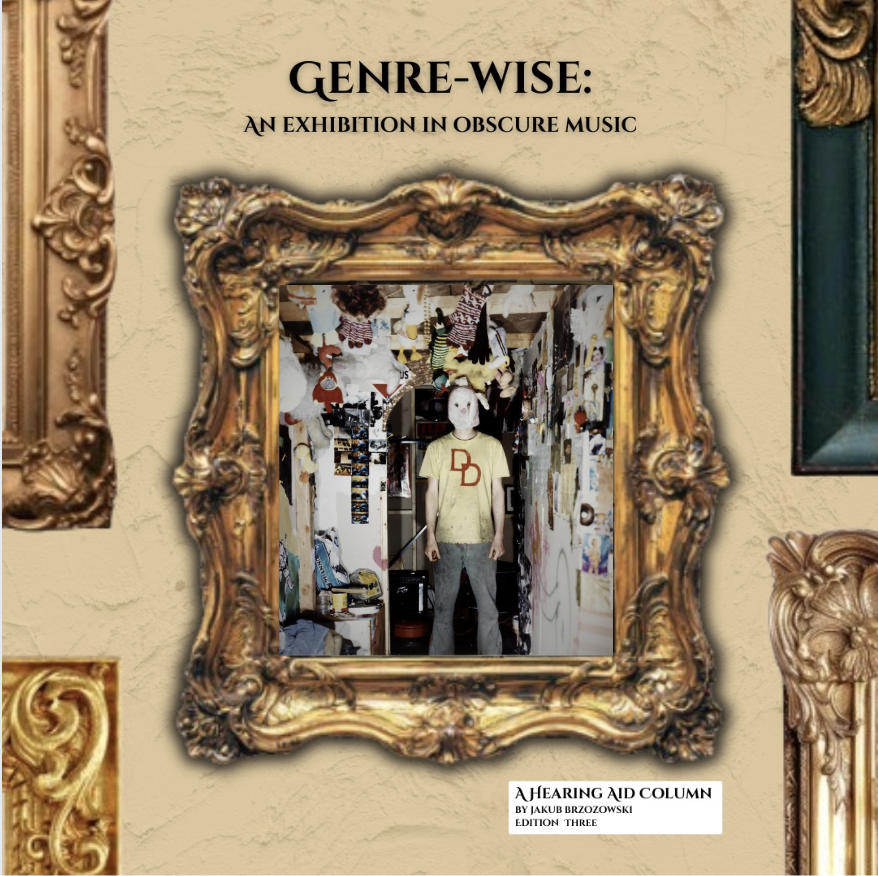
Some pictures of Fort Thunder in its heyday
Live/Work: How Old Mill Buildings Shaped Providence’s 90s Art Renaissance