
Ferrum Sidereum – Zu
80 Minutes of Avant-Jazz-Noise-Metal Mastery
By Jakub Brzozowski
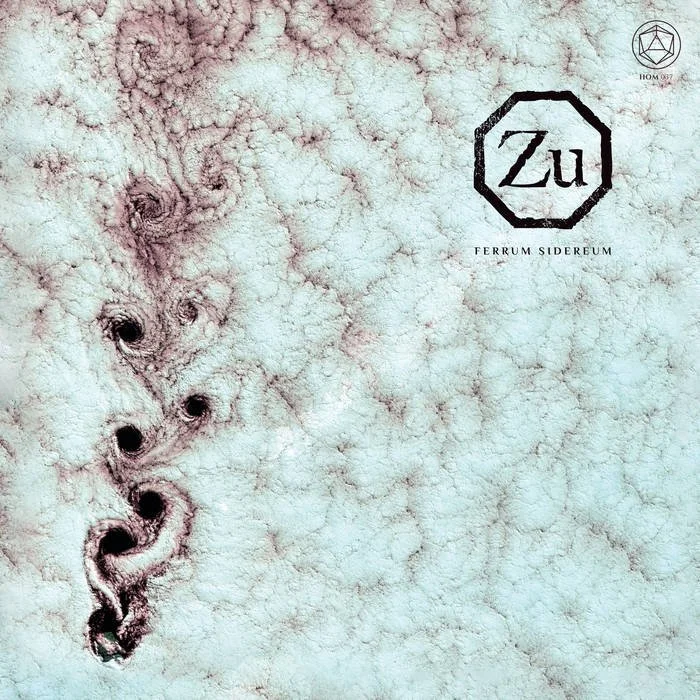
I’m sure you definitely wanted to start your listening year off with a 80-minute long behemoth of an album that meshes avant-garde jazz, metal, and various forms of noise. If not, then let me then convince you otherwise.
Zu is an instrumental power trio, which formed in 1997 in Ostia, near Rome. They create a highly experimental brand of music, which could broadly be described as avant-garde jazz. The band is constructed like a traditional jazz trio without a comping instrument: drums, bass, and a baritone saxophone.
Their music combines their experimental jazz influences with different aspects drawn from various genres, mainly: metal, prog, noise (rock), and industrial music. The building block from which the music sprung is undeniably jazz – their lineup, and the ad hoc nature of their music proves it. Basing their songs on a repetitive bass motif upon which layers of cacophonic improvised saxophone passages are placed showcases key influences from free jazz pioneers, namely Albert Ayler, or Peter Brötzmann (the baritone sax!). The drumming itself too is tight, groovy, filled with ghost notes on the snare and syncopated cymbal odd time rhythms also do the work to remind us of what style of music we’re listening to.
What differs from the jazz tradition, however, is that the orbit (basslines) around which their pieces centre are not traditional arpeggiated walking basslines. Here is where the influence of metal bands, particularly Godflesh shines through as the bass oftentimes will repeat one or two notes for the entire duration of the songs. However the rhythm behind it is never straight, as the note patterns are ever shifting and we can imagine how the rhythm section skews, bends, or twists the notes out of their instruments, as if they’re assaulting, rather than playing the instruments. This odd-time signature complexity is a feast for any prog rock fan and the band does indeed cite prog as their influence directly. They most probably draw from Rock In Opposition acts, namely their spiritual ancestors Henry Cow – a band that also combined chaos, dissonance, jazz, and rhythmic complexity within their music.
Ferrum Siderum literally means “iron of the stars” in Latin, but in fact refers to the meteoritic iron ore. This is, frankly, a perfect encapsulation of how this album introduces itself to your headphones. The album is unapologetic in almost every regard in which it can be. Its production is stark, cold, and unmistakably industrial. It enhances the music’s mechanical features, as mentioned above, Zu centres their compositions around groovy, repetitive basslines. The ones presented on this record are even more mechanical, due to the bass tone, which sounds closer to spluttering machinery in a derelict, yet surprisingly effective factory, than to a distorted instrument being played in a studio.
Nonetheless, the bass is not just a sonic rock made of rhythm on this album. The ensemble’s bassist – Massimo Pupillo enriches his performance by including some mantric arpeggios in 3/4 often employing chromaticism that gives the music a slightly esoteric touch. ‘Golgotha’ is a brilliant example of that conjunction: the saxophone in the midst of its labyrinthine improvised outbursts follows the bass briefly to show the rigour and precision with which the band members’ respond to each other. This song also speaks to their metal lineage, that is not overstated on this record, in the latter half we hear an acceleration of the tempo, to the advancing thrashy one beat. Another example of it would be ‘La Donna Vestita Di Sole’, where double kick drumming appears in the main groove, prevailing in the first part of the track.
The drumming itself is a masterclass in tackling this instrument. The way it highlights the main features of the basslines, or matches the intensity of the saxophone solos, is simply exquisite. Furthermore, the amount of satisfying fills and the number of ideally placed cymbal accents is nothing short of extraordinary. I particularly marvelled at the way the bass motif in ‘Kether’ is complimented by ever-shifting accents on the drums. Additionally, the use of “tribal” drum grooves, executed on the toms, in the majority of songs present on this record serves two purposes. Firstly, it nuances the rhythmic approach beyond the typical hi-hat / ride and snare formula; secondly: it speaks to the record’s “jammy” quality, that is the listener virtually feels as if they found themselves in a middle of an occult ceremony, where the band is in a trance, and the object of worship is noise and chaos.
Noisy bass playing is combined with double-kick drumming and tom rolls, which thanks to spatial drum production helps to reflect the ‘A.I Hive Mind’ song title perfectly. It seems as if we’re in the middle of a literal hive mind, but the collective consciousness does not empower us. We are rather relegated to remaining within it, which is inherently oppressive and makes us feel even weaker and more powerless. These impressions are exacerbated by a whirlwind of noise that the saxophone creates with the help of distortion pedals. Simultaneously, the complex, exotic (to Westerner’s ears) acoustic guitar arpeggios function as tension-upkeeping transitions between the onslaughts of cacophony. As the song draws near its (initial) conclusion, the whole band’s performance is drenched in noisy effects. The song just seems to be collapsing as we continue listening to it, adequately illustrating the subject matter. …But this is not the end just yet. After 30 seconds of tension-building, executed through snare rolls and industrial-like ambience, we are granted with the biggest breakdown of the whole album. A one-note bass riff coupled with the meanest tone on the whole record (I wouldn’t be surprised if they did tune down specifically for that section), which would probably impress G.C. Green, and Dave Edwardson.
Descriptions such as the one above, could’ve very well been written about any song on the album and this is one magical thing about it, as well as instrumental music (when executed correctly) more broadly. Due to the lack of lyrics to supply us with an impression of the music we’re hearing, we are left with our own imagination and it is up to the performer and our brain’s combined creativity to conjure up meaningful interpretations of pieces of instrumental music. Needless to say, Zu relishes in that formula and all their song titles, impressive mastery of song structuring, and their dramaturgy makes this album a fertile ground for evocative interpretations.
The record seems to quieten in the middle of its runtime, from ‘Pleroma’ up to the penultimate ‘Perseidi’. This is the low-point in terms of the dynamic on the record, it’s also the place where the space ambient / Kosmische Musik influences shine through the most. While inclusion of ambient soundscapes certainly makes the music feel directly cosmic, they never really take over the whole arrangement and it seems as though the group is attempting to cool it down a bit, while not breaking away from their more concrete formula. In particular, playing ambient music with a rhythmic section and a synthesiser is quite a tricky thing to pull off satisfactorily (the grandmaster Klaus Schulze succeeded on his 1976 masterful Moondawn, with The Cosmic Jokers’ Harald Großkopf’s aid), as ambient is inherently arrhythmic and so has to be the approach to orchestrating the drum parts. Unfortunately, while Tomas Järmyr’s instrumental prowess and sheer skill on the kit is undeniable, the drumming arrangement on those few songs just feels at odds with what the rest of the music is attempting to achieve. It makes somewhat more sense, when considering that they never really stray away from the three-piece formula and the synthesiser is only included when it is operated by the band’s sax player – Luca Mai.
One song, where the softer approach works though, is the meandering, aforementioned ‘Pleroma’, where the initial few minutes feel utterly hallucinatory and bear a strong resemblance to trip hop acts, specifically, Portishead. This is all due to the “runny” nature of the music, which seems to be dripping from the walls surrounding us, especially the drumming with its laid-back, ghost-note-heavy, and inescapably jazzy feeling serves to evoke that atmosphere. I still can’t help to instantly track a close similitude to ‘Hautatuuli’ from the latest Oransi Pazuzu phenomenal record: Muuntautuja.
It all, eventually though, goes back to Zu’s well-known thrust on the closing title track, which is the closest they get to doom metal with an agonisingly slow tempo and a crawling riff, that could appear on Celtic Frosts’ fantastic comeback album – Monotheist (2006). As a result, the record concludes on a high note, but I would still expect something more explosive to conclude such an odyssey of a record. After all, 80 minutes is a long while, and, naturally, the band justifies the runtime with the undisputable quality of the music, still something more eventful is to be warranted from a closer of record, which is formally, their most ambitious collection of music.
But perhaps the best aspect of the record is that in spite of all the inscrutable noisiness, rhythmic complexity, mesmerising saxophone tones, and inconceivable sax soloing, this record still sounds like three people playing in a room together. Granted, there are synthesised soundscapes and saxophone effect flourishes to enhance the record’s depth, nonetheless the core of it is a noisy jam and listening to these interactions between these three brilliant musical minds is a pleasure, which I personally seek in jazz-adjacent music.
Is it a flawless record? No. Is it one of the best this year will have to offer? Absolutely.