
The Soundtracks of the Ages
By Chloe Hofer
In preparation for the pinnacle of award show season, the Oscars, I watched as many films as I could, my favorite being One Battle After Another, my least being Marty Supreme. Nevertheless, between all of them, I stopped paying attention to the plot to truly listen to how the scores and soundtracks vivify these films. For Marty Supreme, its only redeeming quality was the score. Despite providing a thematic throughline, the craft of music in a film often goes completely unnoticed. So, I would like to highlight how scores and soundtracks in a range of Oscar-nominated films have shaped the experience, because the sonic choices a composer makes can make or break a film.
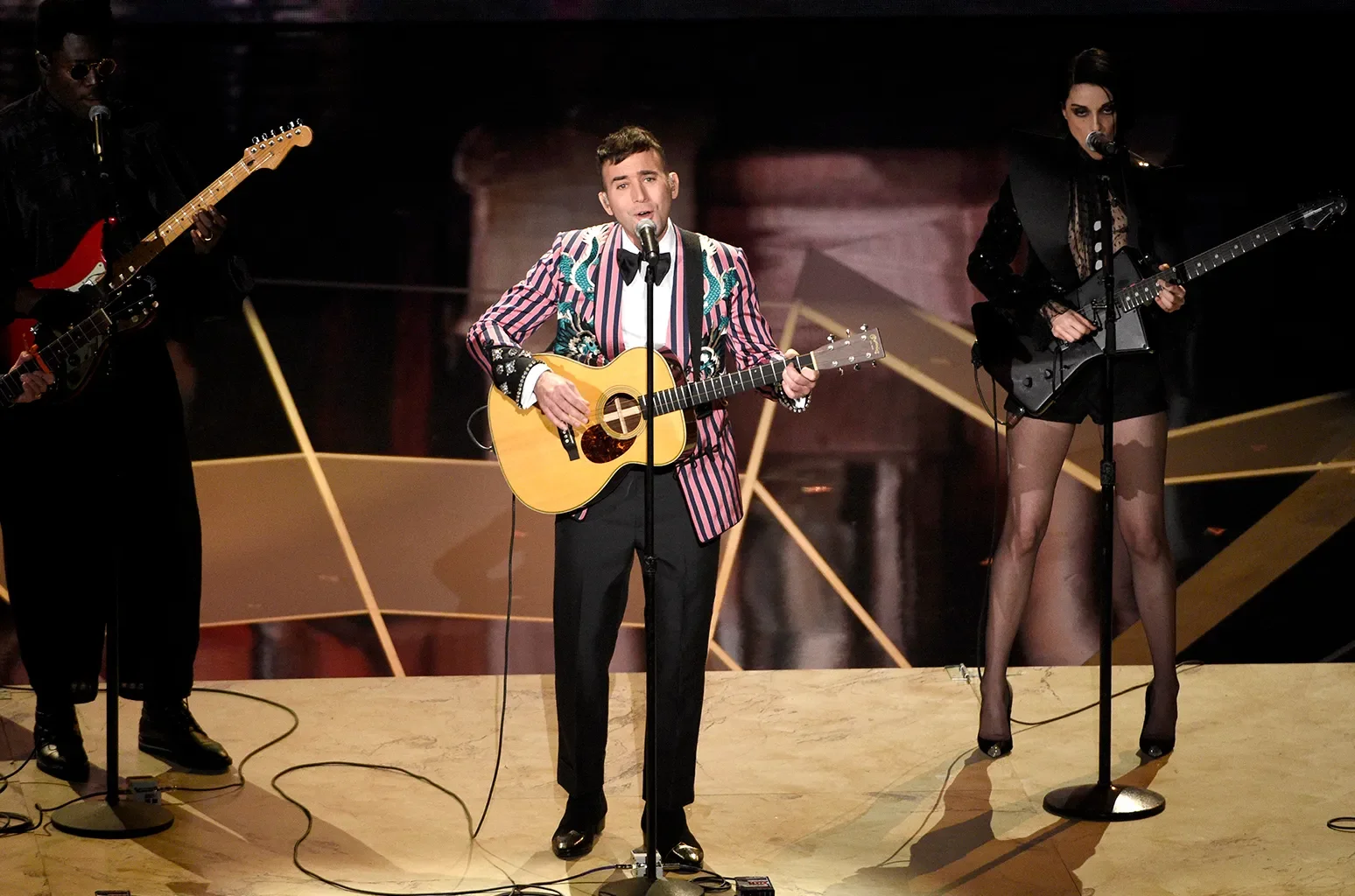
In 2018, ‘Mystery of Love’ by Sufjan Stevens from Call Me By Your Name was nominated for Best Original Song, and despite losing to ‘Remember Me’ from Disney’s Coco it was personally a life-changing track. The song begins to play as Elio and Oliver leave for their trip to Rome together in the final act of the movie, and it is the last hurrah of their relationship as the summer comes to an end. The narrative of the song flows from the beginning to the end of a first love, acting as a “montage” of the relationship between Elio and Oliver. In the third verse, Stevens sings “Lord, I no longer believe / Drowned in living waters / Cursed by the love that I received,” capturing the complicated and fleeting nature of this romance, as the summer closes and Elio and Oliver can no longer be together. This lamentation of their foreseeable end is repeated throughout every chorus in “Oh, woe is me” as they shift from the “First time that you ever touched me” to the final “The last time that you touched me.” Stevens perfectly encapsulated the melodic feeling of their relationship, and a central theme of the film: the mystery that is love.
Continuing on with a Timothée Chalamet theme, in 2021, Hans Zimmer’s score for Dune won the Academy Award for Best Original Score. Zimmer, arguably one of the best of all time, has scored everything from Boss Baby to Interstellar to F1. In a movie like Dune: Part One, which heavily relied upon the score to move the plot along as there were about 5 lines of dialogue in total, Zimmer’s musical ornamentation transformed the film. In ‘Herald of Change’, we can hear a lot of musical motifs that will become central to the plot. It begins as a smaller, more eerie backdrop and transitions into a grandiose boom of sound, combining with choir vocals creating interest in what feels sinister. Zimmer sets the scene through music alone that something is foreboding, the presence of ominous figures that the characters are seemingly ignorant to, but eventually coming for them. While many of the sequences of notes from this song are repeated throughout the film, it is used in one of the first scenes where the emperor comes to the planet Arrakis, and it becomes clear to the viewer that these characters’ fates are already decidedly doomed. Zimmer perfectly sets up the rest of the film and maintains many similar themes as he moves into the second. This film is a perfect encapsulation of the importance of a score in creating the emotive atmosphere that drives the plot forward.
Scores are also deeply nostalgic, in the 2001 film Harry Potter and the Philosopher’s Stone, the score by John Williams is one of the most memorable of the collective childhood of Gen-Z. Although Williams never won an Oscar for his incredible work, it maintains an emotive and evocative experience in (at least) my life. He cemented his impact in the first 20 seconds of the ‘Prologue’ – those all too well-known sequence of notes that bring you right back to the magical world of wizardy and witchcraft. ‘Hedwig’s Theme’, the final song of the film, was used continuously across the rest of the series, maintaining the wondrous, whimsical, and altogether mysterious tone of the films. There is something so reminiscent about a classic score that transforms the film's impact in seemingly a few notes.
In a more modern turn, I would argue that the Challengers soundtrack had a similarly massive impact on the cultural zeitgeist. Despite the fact that the film was completely snubbed by the Academy, Trent Reznor and Atticus Ross’ stress-fueled EDM haze perfectly encapsulates this exhilarating film. In particular, ‘Challengers: Match Point’ feels like the perfect epitome to the tension between the three central characters, with their deeply complicated interrelationships fueling the fire to win in this final scene. We see each character vying for something in the final match between Art and Patrick, as even Tashi is tracked. The tension of competition and sexual desire erupts into something that is truly fun to listen to. As Simmons wrote, Reznor and Ross in this song “remind the audience that tennis is a form of voyeuristic entertainment,” transporting to and from the clubs from which EDM originates. The revolution that is Challengers was framed and formed by the work of an incredibly well-made soundtrack.
So, with this hodge-podge of films I have referenced, it should be crystal clear that music is essential to creating the atmosphere of a film and moving the plot forward. Where would Timothée Chalamet, in his disdain for ballet and opera, and seemingly all forms of classic art, be without the scores that made his movies live and breathe? So, with another award season done and dusted, it's time to give our flowers to the artists who seemingly do it all, the composers behind every scene.