
The Mountain - Gorillaz
By Lucy Kerr
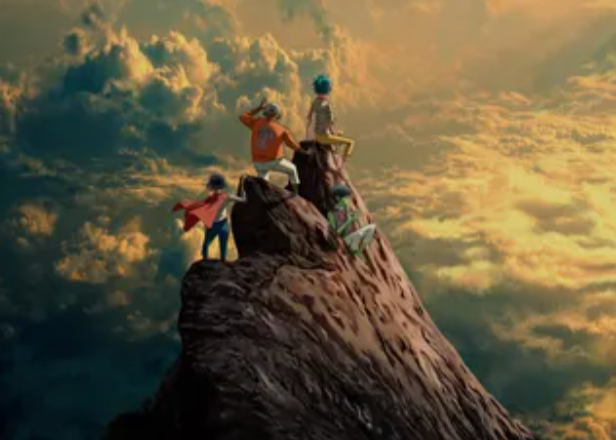
Once again Gorillaz have created an eclectic, hard to pin down, collaboration-packed project. The band’s ninth album, The Mountain, released on February 27th, stays consistent with the band’s penchant for concept albums that navigate heavy themes through dreamy indie pop. Gorillaz creators Damon Albarn and Jamie Hewitt identified The Mountain as their attempt to musically explore death and the afterlife, influenced by their shared experience of losing their fathers while working on this album. A pervasive melancholy has connected the meandering tracks on many of the band’s previous albums, yet despite its heavy theme, it’s a transcendental elevation that seems to be the connecting thread of this latest project.
The album feels like it remains mostly cohesive, despite the variety of musical styles spotlighted across the album’s 15 tracks. In promoting their latest project, Albarn and Hewitt specifically encouraged fans to listen to the album from start to finish, emphasizing that they wanted this album to feel like a time investment for listeners in an age of scrolling and quick consumption. The album is rich with features, with an impressively diverse array of collaborators. Among the album’s guests are several deceased artists, who had recorded previously unused features with Gorillaz that were pulled from the archives to add to this project. Not only was it nice to hear previously unheard music from artists like De La Soul’s David Jolicoeur, but the posthumous inclusion of these late great musicians felt particularly apt for an album exploring death and the afterlife.
In promotional press for this album, Albarn and Hewitt have been eager to talk about their travels to India that inspired the recording process and musical influences for this album. Hearing their story it's hard not to think of The Beatles trip to India in 1968, and the dramatic influence it had on their music. It feels like Albarn and Hewitt’s cultural and spiritual revelations might’ve already professed by the biggest band in the world over 50 years ago. These parallels feel even more pronounced considering that Anoushka Shankar, who provides the album’s enchanting sitar playing, is the daughter of sitar legend, Ravi Shankar, who was a close friend and guide to The Beatles. Still, the project makes interesting use of its Indian influences. The album’s cohesiveness is mainly thanks to its cyclical return to traditional Indian instruments in the interludes dispersed throughout the album. Especially the full circle meditative opening and closing tracks, ‘The Mountain’ and ‘The Sad God’, both of which feature the soothing sitar playing of Shankar and the rich Bansuri performance by Ajay Prasanna.
The track I was most looking forward to listening to when the album released was ‘Casablanca’, which features two alternative rock legends, Johnny Marr, the guitarist and songwriter for The Smiths, and Paul Simonon, the bassist for The Clash. In their earlier careers both Marr and Simonon’s instrumentals provided a driving power behind their band’s greatest works; Marr with his masterful guitar riffs, and Simonon with his relentlessly rhythmic bass. I was curious how these styles would fit into Gorillaz mellow modern sound. I couldn’t help but hope that Simonon might provide a performance reminiscent of the menacing bass track in Gorillaz 2005 hit, ‘Feel Good Inc’. Instead, the two rock legends mostly just acquiesce to Gorillaz’s style, unobtrusively blending in, rather than leaving an obvious imprint of their unique influences. It allows for a cohesive track, but left me wishing they might’ve ventured into a bit more of a distinctly rock sound.
This felt reflective of a tricky balance Gorillaz seeks to strike on between variety and cohesion. In certain moments the album’s guests are boldly given the spotlight, allowing for complimentary contrasts in style, while other featured artists' talents are mainly used to build on the unified sound that the band has already constructed.
The potential pitfalls in sticking with a homogenous sound become clear in the album’s lead single, ‘The Happy Dictator’, a collaboration with Sparks. Whereas Gorillaz often use their features to incorporate an artist whose style deviates from, and therefore balances out, the band’s indie electronic sound, Sparks just add their own signature flavor of offbeat but upbeat synth heavy pop. The song teeters on the edge of being oversaturated by its own quirkiness. But I think it just manages not to fall into the abyss of self-indulgence. Instead the track provides a whimsical earworm amidst a track list of meandering meditative melodies.
Still, tracks like ‘The Manifesto’, which comes at the album’s midpoint, help keep the album from becoming too dominated by a single sound. Trueno and Proof (one of the album’s posthumous guest stars), provide rap verses in Spanish and English respectively, that do a lot of the heavy lifting in anchoring a 7 minute track that might otherwise feel excessive in its repetitive instrumental and wandering vocals from Albarn. From their debut album, Gorillaz seemed to have a keen understanding of the power of rap features to inject an essential boost of energy to the band’s mellow and whimsically-unfocused indie sound. The Mountain is no different, with a handful of these features coming at key moments where it felt like the album began to drag.
The album still feels a bit long at certain points, especially with the repetitive nature of several tracks. Although this repetition feels intentional, imbuing the album with a meditative quality, it still left me wishing certain songs had been more concise. This may just be proof that Albarn and Hewitt’s succeeded in their goal to make the audience feel like listening to the album requires a time investment. On the other hand, comparatively quick 3 minute tracks, like ‘The Plastic Guru’, offered a brief glimpse into an engaging new sound and then felt like they ended almost as soon as they began.
The Mountain ultimately felt like Albarn and Hewitt proving that, even 25 years after Gorillaz’s debut album, they haven’t lost their vision. They’re still doing exactly what they set out to do from the band’s beginning: collaborate and innovate. This album showcases their continued knack for finding ways to interweave musical styles for the creation of something entirely unique. There’s no doubt this album still carves its own niche even among the band’s extensive discography.