
The Living Score of Akira (1988)
By Alexia Heasley
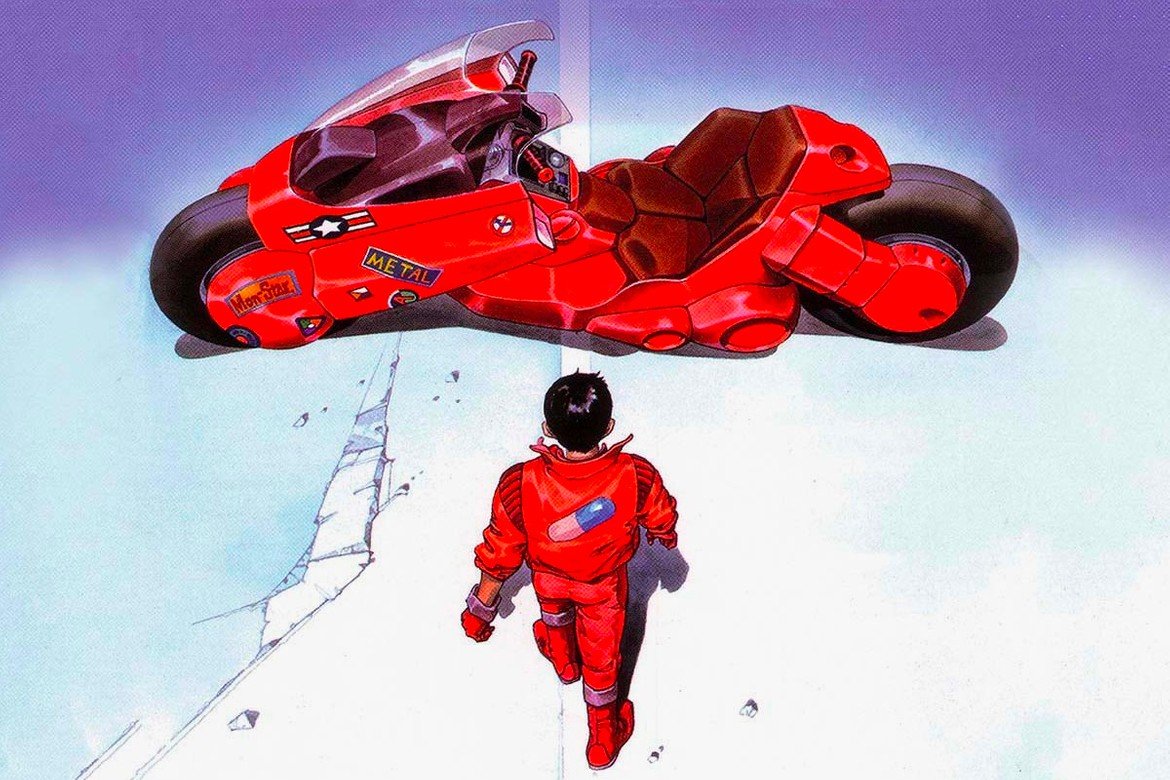
On Tuesday 28th April, I found myself seated inside Dundee Contemporary Arts Cinema for a sold out re-release screening of Akira (1988), restored in 4k resolution. The cult favourite has had a UK-wide re-release over the past few weeks, appearing in DCA specifically as a precursor to the Dundead Film Festival taking place on 7-10 May. While it may seem unremarkable to those unfamiliar with the anime, the repertory screenings stand as an opportunity to encounter a film that fundamentally reshaped how Japanese animation and sound has informed UK cinema in the decades since. The film has often been regarded as a landmark anime, one that, as the host joked, will not make much sense to you if this is your first time seeing it (or admittedly your second or third) due to the remarkably unique, non-linear plotline. Akira takes on a dystopian science-fiction narrative set in Neo-Tokyo in 2019, three decades after the end of a fictional Third World War. The plot follows teenage bikers, Kaneda and Tetsuo, who become exposed to a mysterious psychic force, leading to catastrophic bodily mutations and consequences beyond their understanding. While not made explicit, the film clearly addresses the effects of nuclear radiation poisoning following the dropping of the atomic bombs during the real Second World War in Japan. The narrative and visuals are undeniably striking and have been influential on cinema since. The film is best known for the ‘Akira slide’ featured in the opening scene, where Kaneda drifts his red motorcycle sideways to a smooth, sudden halt. It has since become a celebrated homage in pop culture, replicated dozens of times across films, series, and cartoons alike. Yet as striking as these visuals are, it is the score that quietly, and sometimes violently, redefines the entire experience.
Composed by Shoji Yamashiro and performed by the experimental musical collective, Geinoh Yamashirogumi, the score resists simple categorisation. Yamashiro was not only a composer, but also a record producer and agricultural scientist. His interdisciplinary curiosity and talent reveals itself within the music, placing him in the perfect position for this pseudo-scientific narrative. Most notably, the soundtrack resists traditional conventions of Western film scores, drawing instead from a fusion of traditional Indonesian Gamelan rhythms, Buddhist chants, avant-garde electronics, and Japanese Noh vocalism. The latter is characterised by its highly stylised chanting technique central to the 600-year-old tradition of Noh theatre. The theatrical masks worn required low, resonant sounds to amplify diaphragmatic breathing originating from the core rather than being projected outwards, marking the sound entirely distinct from vocal styles familiar to Western opera. The combination of these sounds produces something both ancient and alien, a soundscape drowning in ritualistic, spiritual sounds, untethered from familiar cinematic norms. Yamashiro perfectly captures the film’s struggle between natural humanity and mutating technological advancements, as vocals compete against intense booming percussion supported by synthesised layers of electronic sound. The music mutates alongside Tetsuo, constructing the dystopian urgency of acting on primal instincts when faced with such unpredictable power and danger.
The significance of the 2026 UK re-release in regular and IMAX formats nearly 38 years after the film’s original debut, lies in its acknowledgement of the role Akira played in reshaping Western film culture. When Akira first reached British audiences in the early 1990s, it challenged the notion that anime was a niche import from abroad without cultural cinematic relevance. These screenings have acted as a gesture of respect to the cultural exchange the film catalysed in British culture, and the respect that Britain now shows Japan regarding the consequences of war and radiation poisoning, in a way that fans of the film are noticing the US has failed to do despite its role in causing that harm.
As the limits of evolution and the definition of life are explored in the film, the score becomes an organism in and of itself. The famous bike slide scene gains life through its mesmerising animation but also the percussive propulsion that underpins the scene, a polyrhythmic engine that competes with those depicted on the screen, driving the images forward at the same pace as those revving bike engines. This exclusively instrumental opening to the score undergoes a transformation alongside Tetsuo’s as the film progresses. Voices become embedded within the flesh of the music, groaning, chanting, mutating, gaining a corporeal sentience that seems to experience the same suffering as Tetsuo, thrusting that same feeling upon the viewers. Once more, the score marks itself distinct from Western soundtracks, resisting the temptation to accompany feelings made clear through the narrative. Akira’s score takes on the responsibility of evoking feelings by destabilising them, animating a haunting tension that creeps up on you, making the hairs on your neck and the arms of your velvet cinema chair stand up simultaneously. While the 4k restoration undoubtedly improves the visual imagery, the movie’s place in cinema allows the acoustic space to be appropriately filled in a way my laptop speakers could not previously achieve. The towering cityscapes of the film demand scale in the same way the sound design does, with resonant drums, chanting, and sudden shifts from overwhelmingly dense sonic scenes to total silence.
In the context of a UK re-release, the cult film that once disrupted British film culture is reinstated on its own terms and respected for its impact, screened in the DCA in the original Japanese with English subtitles, alongside the original score, uncompromised. Despite being released nearly 40 years ago now, the sound remains untouched by time, maintaining a futuristic feel even to us, 7 years past the 2019 setting.