
The Art of Situationships
By Chloe Hofer
Situationships, a term that has flung into popularity captures the messy romance of this modern era. The term encapsulates the complication between two people, deeply uncommitted to one another and yet continually interlinked, because being non-committal is in vogue. Literally. Chanté Joseph wrote the famed Vogue Article Is Having A Boyfriend Embarrassing Now?, leading to increased discussions on Gen-Z’s seemingly over-complicated understanding of relationships and love. But has the rise of situationships changed the art we listen to, or is music that offers an understanding of the pain of yearning nothing new?
Sarah Kinsley’s ‘Lonely Touch’ offers a precise articulation of the situationship, a lack of emotional security in a physical relationship, leading to a paradox of painful desire. The first verse utilizes this oxymoronic situation, “How to say what I want / Is to talk, but not talk / Is to feel without hands / How to love and never land.” It's the push and pull within yourself to want to say everything and to emotionally connect with the same passion as the physical, and yet it never comes to fruition. The song frames touch as the seemingly only acceptable vulnerability, forcing Kinsley to accept this “lonely touch,” because she is just “Lonely enough, / to starve for attention” from anyone, but especially the one she loves. Physical intimacy doesn’t quell your desire for love, rather it does the very opposite, but when you are forced to choose between nothing at all and something, you often choose something, even if it forgoes your heart. You are then forced to cope with the pain during the after, represented by Kinsley’s repetition of “Where do I put my heart?” at the end of the song.
Music is decidedly the best place to put your heart, the vulnerability of artists offers a catharsis that will often never come from romantic interests. Artists like Lizzy McAlpine, boygenius, and Hozier extend the expression of the residue of situationships, and how the emotional asymmetry leaves you scarred in ways that may never heal. So what are we to do except find solace in art. Music comes to be the only validation of a love that feels singular and lonely. Hozier’s cover of ‘Do I Wanna Know?’ encapsulates a need to be honest and a desire to equalize your love. Hozier surrenders everything in this version, a devotion of his never-ending love for a person that doesn’t feel the same. The blend in the last verses of the song, “Maybe I’m too (was sorta hoping that you’d stay) / Busy being yours to fall / For somebody new (if this feeling goes both ways),” feels as though Hozier devotes all of himself to the other, despite knowing that they do not feel the same. An encapsulation of the curse of casual, signing up to be intertwined with another, either hoping to change their mind about commitment or within a sense of delusion that you will not fall for them. In the end, stuck at an impasse alone.
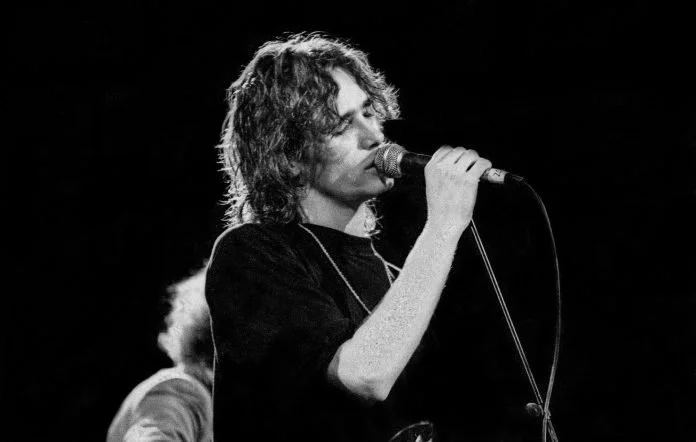
However, it becomes clear that rather than a uniquely modern condition, this emotional stalemate is part of a long history of desire, uncertainty, and unreciprocated attachment. While the term situationship may be new, the associated longing and yearning are continued from generations long before. Art has always filled in the gaps, whether that be novels like Great Gatsby and Wuthering Heights, or paintings like The Kiss by Gustav Klimt. The music of the 21st century is only the next iteration of finding meaning within art to help process one’s emotions. What feels contemporary in situationships was being sung decades earlier, as artists like Jeff Buckley and the Cranberries gave voice to longing and emotional devotion without reciprocity.
Jeff Buckley is the gold standard for musical pining, featured on practically every playlist labelled “yearning,” “longing,” or my personal favorite “an overwhelming sense of longing to be loved.” Released in 1994, Grace, is his most popular album with ‘Lover You Should’ve Come Over’ amassing over 418 million streams. The continued popularity of his music, almost 32 years since its release demonstrates the relevance of his lyricism and sound. As Gen-Z hits their 20s, they connect with Buckeley’s sentiment, “Too young to hold on / And too old to break free and run.” This liminal positioning between youth and adulthood mirrors the emotional paralysis of situationships, desiring love without the necessary emotional commitment. As a result, it leads to Buckley’s most famous lyric, “It’s never over / She’s the tear that hangs inside my soul forever,” implicated and stained by a love that was lost by your own youthful stupidity. The lamentation within the lyrics understands how pain may feel as though it will last forever, a desire to give everything to have another chance. Jeff Buckley blazed the path for this genre of music, but continually as we see time and time again art explains things that feel unspeakable.
The art of situationships, or rather that of yearning and desire, is nothing new; it just feels as though it is. The internet has expounded the idea and term of unrequited love into a whole new categorization, but rather we just have new ways to articulate feelings and ideas that felt inexplicable before. Ultimately, it's clear that everyone, everywhere is longing and yearning, just not the person you are into.