So, Tell Me, Why Should I Care About Marty Supreme?
By Eva Sawdey
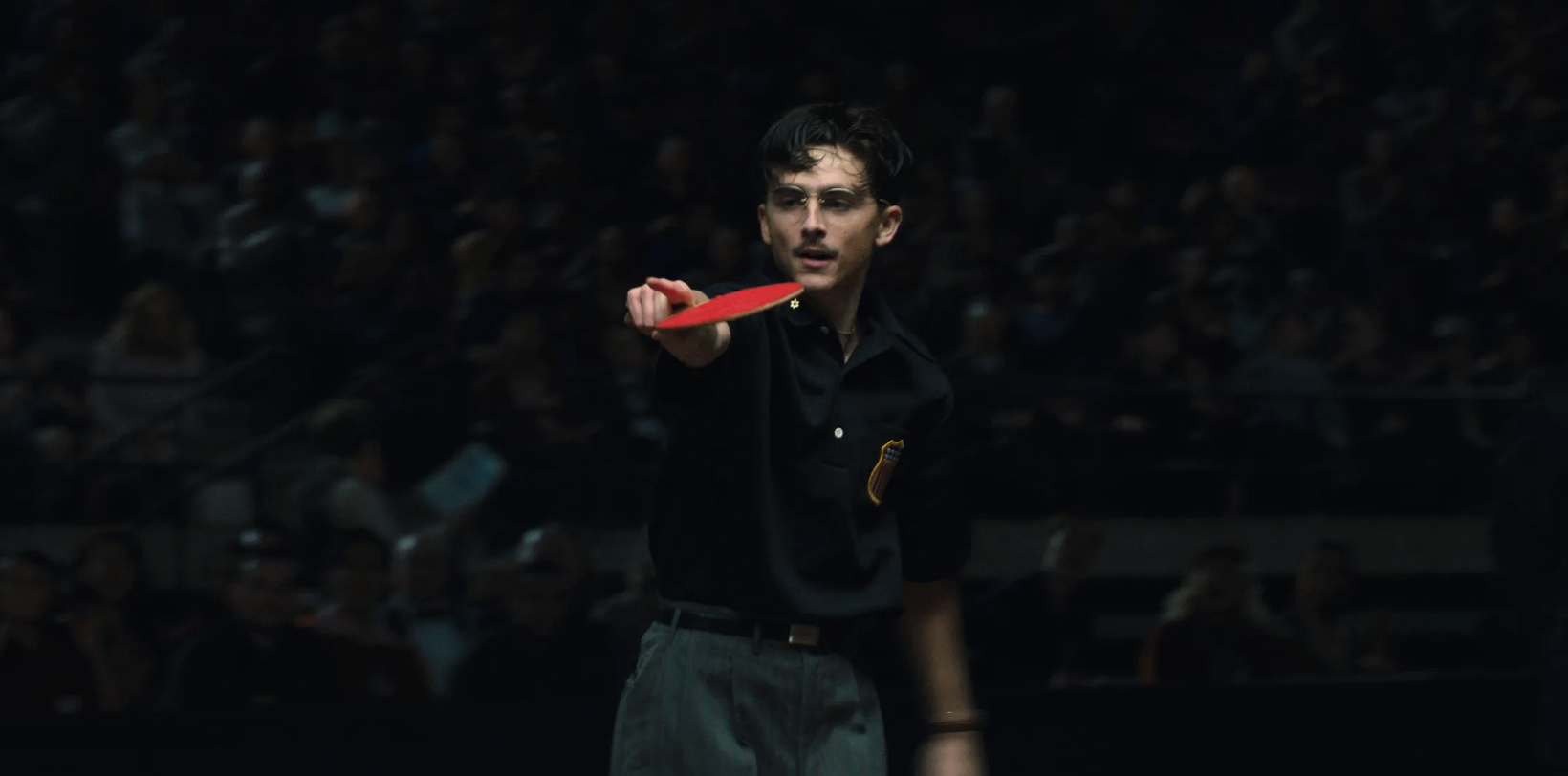
During a CNN and Variety Town Hall Event, Timothée Chalamet commented, “I don’t want to be working in ballet or opera…no one cares about these things anymore” while promoting his new movie, Marty Supreme (about a ping pong player). Since then, the actor has faced lots of controversies, seen during the 2026 Oscars by Conan O’Brien, who jokingly said “I’m told there’s concerns about attacks from both the opera and ballet communities.” The camera panned to Chalamet sitting there, laughing at this remark. Though I’m not famous nor media trained, I felt this reaction was too nonchalant and that Chalamet may think he’s out of the woods. Regardless of whether or not this statement is true for the general public, Chalamet’s words have elicited disappointment in the shift in his recent character.
Firstly, Chalamet overlooks his privilege, being in successful movies that have large followings, when he puts down ballet and opera. Acting is known to be a rigorous and difficult career to succeed in, especially if trying to pursue it as someone with no connection to the industry. Timothée Chalamet has shown that he deserves his success through his way of embracing himself in every role that he has played, from Kyle in Beautiful Boy, to Laurie in Little Women, and Willy Wonka in Wonka. And I recall some dancing and singing in that, but oh well. One of the many charms of Chalamet is his modesty and humility, but has his long-lasting fame made him forget the struggle of the arts industry, specifically having people believe in you? Promoting movies is all about sparking interest and making people care, but by being successful, people are interested just by knowing you’re in the movie. He doesn’t really need to do a lot to convince people to see his films, unlike opera and ballet performers. If Chalamet was unlucky and unsuccessful in his career, would he still feel the same about, or feel the need to bring down, ballet and opera?
Because of Chalamet’s success, what he says, thinks, promotes, or overall shows enthusiasm towards, inspires and influences other people’s thoughts, leading me to my second point: By affirming the notion that nobody cares about ballet and opera, impressionable fans are more likely to turn an eye away from these art forms, and Chalamet actively contributes to the problem of giving up on ballet and opera. Like you’re an actor! Your career is dependent on people believing in you. At the end of the day, Timothée Chalamet is a human being. He’s not perfect and he will misspeak from time to time, but what he says still hold weight for his audience. While a majority of reactions have been about Chalamet and his loss of whimsy and change in his online persona, people may have interpreted his comment as validation for letting ballet and opera slip within the cracks of what society holds important.
I think my biggest problem with his comment is the sense of betrayal when support for the arts must be emphasised, especially with the rise of AI, and art programs being defunded. These industries hold cultural importance independent of one another. Criticising other art forms feels unnecessary, and a bit hypocritical, when having grown up with experience in dance and knowing how difficult it can be for any artist to succeed in their realm. Chalamet saying no one cares about ballet or art is interpreted as people care more about acting, creating a hierarchical status among the arts. It also reveals Chalamet’s thought process: he is above those because acting has a larger audience.
Ballet and opera, while having smaller audiences than acting, are still notably impressive and hold a cultural importance. Ballet was first introduced in the 1400s during the Italian Renaissance as entertainment for upperclass parties. Later, it was brought to France by Catherine de Medici, wife of French King Henry II, and transitioned to a combination of choreography and storytelling. Ballet significantly contributed to the Romantic movement of art and literature during the 19th century and is widely considered to be the foundation for many other dance forms, including jazz, contemporary, and modern dance. Opera was born in response to the tired 1500s musical trends, with an emphasis on properly conveying lyrics through song. Throughout the years, the attitudes towards opera have changed, causing the genre to be reinvented in many ways. In the 1960s and 70s opera became very expensive to put on, struggling to pay for the many parts that are incorporated within the performance: writers, composers, architects, acousticians, the orchestra, principal singers, etc. Composers were able to overcome this by looked for cheaper alternatives, creating musical theater.
While ballet and opera are not talked about as much as acting, to say that no one cares about them is just false. The Nutcracker is a Christmas classic that attracts many people. From 2022 to 2024, the New York City Ballet ticket revenue for The Nutcracker rose from $57 million to over $87 million, with attendance increasing by 18%. Opera is heavily embedded into The Phantom of the Opera storyline, which has been a long-term successful musical. The first national tour of The Phantom of the Opera began in 1989, and did not leave the touring circuit until 20 years later in 2010, with other groups still performing to this day. With all the money and time spent keeping just two products of ballet and opera in circulation, it’s apparent that people still care and indulge in these art forms.
Timothée Chalamet’s recent backlash has opened opportunities for people to be having conversations, primarily about Chalamet’s character shift, but also (and more importantly) the relevance of ballet and opera and the conservation of art forms. Ironically, despite Chalamet's attitude, people’s attention has been drawn to ballet and opera since the CNN and Variety Town Hall Event. Is Chalamet saying that we didn’t need THE Nana Noodleman’s cover of ‘Golden Slumber’ in Sing? Maybe he feels his dance moves (we’ve all seen them) are the best thing since… what was the movie that he was just promoting? Just joking! But in all seriousness, we need ballet and opera, along with every art form, to keep the creativity and passion of expressing ourselves alive, especially in a muted and numbing existence like today's world. Art inspires people, making them feel every emotion from under the sun. Acting may be more spoken about, but that does not mean that others art forms are less important.