Scouse Subversion: Esdeekid and The importance of the Regional Accent
By Julius Swinfen-Cranney
Peter Woods: "Paul, coming quickly back to you again. Mister Edward Heath, the Lord Privy Seal, has said that the other night he found it hard to distinguish what you were saying as Queen's English."
Paul McCartney: "Ah, yes."
Woods: "Now, are you going to try and lose some of your Liverpool dialect for the Royal show?"
McCartney: "No, are you kidding. No, we wouldn't bother doing that."
George Harrison: "We just won't vote for him."
(Beatles laugh)
McCartney: (jokingly, in upperclass dialect) "We don't all speak like them BBC posh fellas, you know?"
Woods: "Right well, with that, I better wish you good luck in the show. What song will you be singing most there, do you think?"
McCartney: (upperclass dialect) "Well, I don't know, but I should imagine we'd do 'She Loves You.'"
(Beatles erupt in stuffy, mock-upperclass laughter)
McCartney & Lenon: "Jolly good, jolly good."
This excerpt is taken from a 1963 interview with the Beatles, conducted by Peter Woods, in which the quartet are questioned on the use of their Scouse accents on their rise to fame. It’s clear that, even back then, the artist’s use of regional accents and dialects was tied to their identity. Much has been said about the Beatles influence on the landscape of music, but what’s key here is how they subverted industry norms: they came up as working-class lads from Liverpool (a city in industrial decline), defied the ‘polite pop-star’ archetype of artists at the time, and set the stage for bands to be more authentic and experimental.
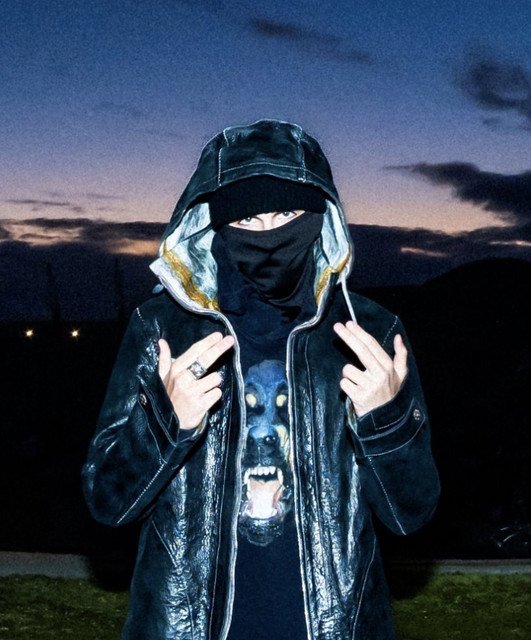
Fast-forward to present day, where stepping up to the mic is Liverpool-based Esdeekid. The balaclava-donning rapper rose to fame in late 2025, with hit songs like ‘LV Sandals’ and ‘4 Raws’ that sent him from UK underground circles to international heights. His rise to fame is not something to be understated; the 20 million monthly listeners on Spotify really speak for itself. So what was it that caused Esdeekid to reach such an altitude of fame? It could be Wraith9’s eerie, murky melodies and hostile 808s that compliment Esdeekid’s assertive delivery. It could be the mysterious aesthetic that surrounds him, and the fun conspiracy theory that the rapper is actually actor Timothée Chalamet under the balaclava. But, I think the often overlooked thing is his grasp on his Scouse accent and connection to his home city.
UK rap has always been a vital mouthpiece for underrepresented communities. From Dave’s criticisms of social and racial injustices in the UK, to Cookie Crew, frontiers of black British women in rap, the genre has always been an accessible tool for those from disadvantaged areas to push against the status quo and make their voices heard. Often, this is accomplished through the authenticity found in using their home accents – an unwavering refusal to conform to standardised, often American modes of delivery.
In particular, the Scouse accent is stereotypically characterised by its sing-song tone and high-pitched, nasally sound, which is often mocked or perceived as low-prestige. According to the 2022 ‘Speaking Up’ report by Sutton Trust, Scouse has been consistently ranked one of the lowest accents in terms of its prestige, while 30% of university students and 25% of professionals reported being mocked or criticized for their regional accents in formal settings. Aside from the very famous example of the Beatles, it’s not something heard in popular music a lot. Parodies of nicher UK accents don’t help with breaking away from stereotypes either; West-Country or Northern accents are done as jokey impressions, but never utilised in a heartfelt power ballad. It’s unfair that the variety and culture that surround accents don’t get to be revered in ‘genuine’ art, in the same way that standard English and Americanised delivery is. What can be done about this? How can we begin to look at accents like Scouse with more acclaim? Well, enter Esdeekid.
Esdeekid’s integration of his Liverpuddlian twang is not only a statement of nonconformity, but also a kind of reshaping of what the accent can be. It’s his signature trait, but not in such a way that diminishes the music or disrespects the accent’s cultural heritage. Instead, he blends his intonation into the tough and aggressive rap style, making his pronunciation not something to be scorned, but to be discomfited by. On the track ‘4 Raws’, Esdeekid raps about his journey from Liverpool slums to his newfound position of fame: “I'm a scumbag, I was raised in Liverpool slums, lad / I was broke, no joke, but I spun back / And now I sip this rum and I fund packs.” By calling himself a scumbag, he plays on negative stereotypes of Scousers by unapologetically leaning into them – a real “yeah, so what” mentality. He brags about his success through drinking and having money to “fund packs,” a classic use of Braggadocio in UK rap to assert self-worth and claim power to the underrepresented. The twist with Esdeekid is his specific connection to his accent and Liverpool as a city. The accent is not a joke or something to take lightly.
Esdeekid’s “Kate Moss fame” only seems to be getting hotter, with a collaboration with US experimental rapper Yeat and performance at the Gucci AW26 afterparty. Popular on multiple social media platforms (multiple tracks used as Tik-Tok sounds) and with a mass international following, it’s clear that what he’s doing is working. Fimiguerrero raps on Esdeekid’s track ‘5am’, “shell a show in Liverpool, I'm Paul McCartney.” With this comparison in mind, maybe we can look at Esdeekid’s embrace of his accent as a new kind of ‘Esdeemania’ and have a new perspective on how art from underrepresented areas of the UK can be viewed.