
ROSEBUD — Current Joys
Review by Katie Wright
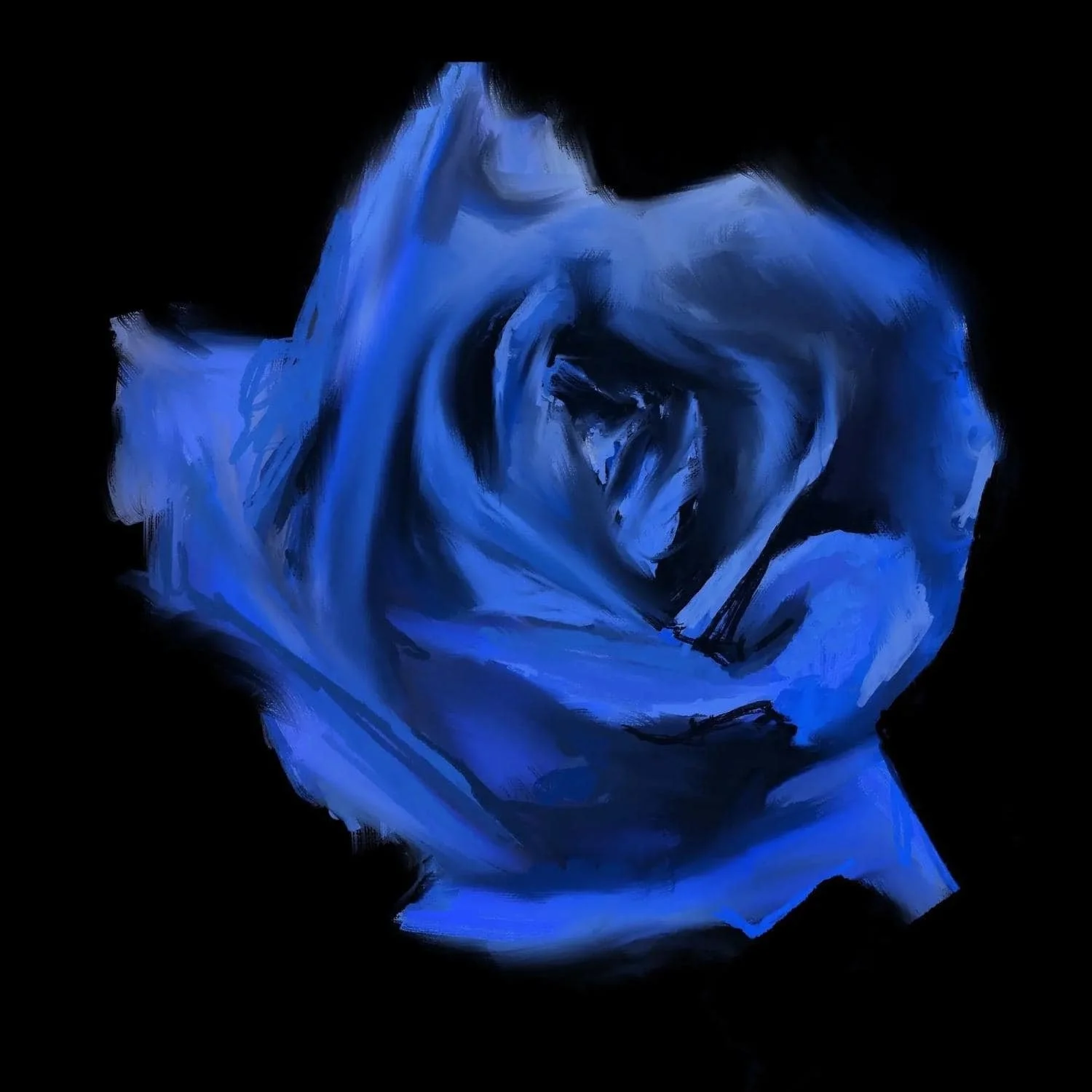
Two of Nick Rattigan’s, better known as Current Joys, songs recently featured in the unprecedentedly popular film Obsession, bringing more attention to his work than ever before, just in time for the release of his new album, ROSEBUD. However, the album is a considerable departure from the nostalgic bedroom pop that listeners might expect from Current Joys’ earlier work. Instead, Rattigan decided to venture into something distinctly different, and a little more edgy, and created an album which is comparable to a roller coaster of electro-pop mixed with occasional piano and a screamo influence. That is, the album has ups and downs and doesn't give the listener much time for reflection. While Current Joy's older songs were quiet and sad, this album is loud and sad.
The record opens deceptively gently with ‘HOLE’, whose introduction is reminiscent of earlier Current Joys tracks such as ‘Kids’ and ‘Symphonia IX’. However, this initial impression is quickly shattered by the track’s heavy electronic pulse and increasingly prominent guitar, edging towards grunge while remaining a million miles away from the nostalgic sound listeners might expect. It is an effective choice of opener, not least because it sets the precedent of the album itself. The track introduces Rattigan’s newer, more scattered sound, one which becomes increasingly apparent as the album progresses.
One of the album's strongest features is its lyricism, which has notably improved since Rattigan's earlier work. As its title might suggest, ‘HOLE’ focuses around the idea of a hole inside his body, as he attempts to understand its existence while expressing shame at even looking at it. An apparent metaphor for the act of trying to fill a void, this imagery could easily come across as heavy-handed or clichéd if it was expressed less sincerely. Instead, the track feels genuinely bleak, and this emotional weight is apparent throughout the album. Indeed, these lyrical themes are integral to the album's very creation, with ROSEBUD stemming from a particularly difficult period in Rattigan's life, one which he has gone so far as to describe as his “years of self destruction.”
Rattigan initially shared these slower, more stripped back tracks with producer Danny Dwyer, who performs under the alias never goodbye. Together, they reworked the material and layered it with thick distortion and electronic glitches. The result ended up giving the songs a rawer, more visceral quality, one that feels particularly fitting given its darker lyrical subject matter. This willingness to branch out extended beyond the album itself, with Rattigan also exploring experimental hip-hop and collaborating with various rappers, including Lil Yachty.
Admittedly, the album's new sound is memorable and surprisingly punchy. Traditional pop hooks are apparent through layers of static, as heard in the latter half of ‘CHAOS’, while heavy digital effects occur on almost every track. It brings together a (suitably chaotic) amalgamation of screamo, nu-metal, electronica, hip-hop, power-pop, emo and darkwave, and it would hardly be unreasonable to suggest that this is simply too many components. At various points, it feels jarringly obvious many of these effects have been layered onto the tracks after their initial creation, which results in an occasionally incohesive and overwhelming sound. This is a shame, particularly when the underlying tracks are strong enough to stand on their own, especially if they were given a little more space to do so. ROSEBUD can come across as an attempted mishmash of Slipknot and The Beatles, with neither influence incorporated convincingly enough to make the combination entirely work. Perhaps Rattigan would have been better served by leaning more decisively into one particular direction, rather than attempting to work with so many competing sounds. Nevertheless, there is an undeniable passion behind this album. Rattigan clearly has a genuine enthusiasm for the influences which create it, and this enthusiasm makes ROSEBUD feeling like a passion project, even if the execution occasionally falls short.
Perhaps, though, this clashing of sounds is more purposeful than Rattigan is given credit for. Maybe ROSEBUD was made less with the casual listener in mind, particularly given the influx of new attention surrounding Current Joys following Obsession, and more for Rattigan himself. He has described wanting the album to be “a collage of all of my influences”, and it undeniably fulfils that statement. Perhaps the album is meant to be both intriguing and, at times, ‘too much’. After all, that is arguably preferable to something formulaic, robotic, and passionless. Where conventional sad songs often encourage the listener to feel bad for the singer, Rattigan seems to want to escape that sympathy. By combining his emotional lyrics with distortion and electronic effects, the music does not make his vulnerability its sole focus. Instead, the listener is allowed to experience something of their own, rather than simply listening to Rattigan's sadness set to a rhythm. ROSEBUD is therefore an interesting and deeply personal record, one that challenges its audience as opposed to just trying to appeal to them. Rattigan combines the emotional vulnerability of his songwriting with static noise, and, much like the experiences that appear to have informed the album, the sound produced as a result is not always particularly pleasant or cohesive. Perhaps that is precisely the point.