Reinterpreting an Angelic Instrument: LEYA Harpist Marilu Donovan
By Lena Sophie Eckgold
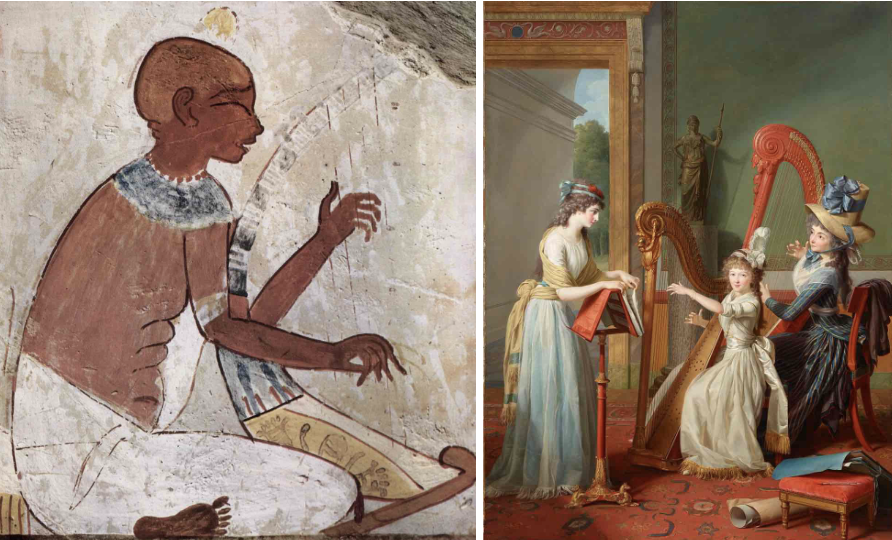
The harp is one of the oldest known musical instruments and was already widespread in the era of ancient Egypt and Mesopotamian cultures. From the late Middle Ages through the Baroque period, it became popular at the courts of Europe. Marie Antoinette regularly entertained her guests with her harp, and the instrument was also a status symbol in the salons of the Victorian era. For women in particular, mastering the harp was seen as a sign of refinement and bourgeois respectability.
In European visual and musical tradition, the harp is closely associated with angels, nymphs and allegorical female figures, as well as with purity, virtue and grace, giving it a sense of sacred, feminine perfection. At the same time, it is a rather unique instrument: pompous and striking in appearance, a fixture in a typical Western orchestra, yet often restrained due to its quiet volume. Apart from solo repertoire and harp concertos – such as those by Debussy, Elgar, Mahler, Mozart or Tchaikovsky – virtuoso concerts, or occasional weddings, the harp remains relatively inaccessible to the general public.
Yet harpists in the jazz scene, such as Alice Coltrane and Dorothy Ashby, as well as artists like Björk and the soul and R&B-influenced harpist Sophye Soliveau, have demonstrated the harp’s versatility across genres and thereby reaching a wider audience. An example of such a reinterpretation is harpist Marilu Donovan.
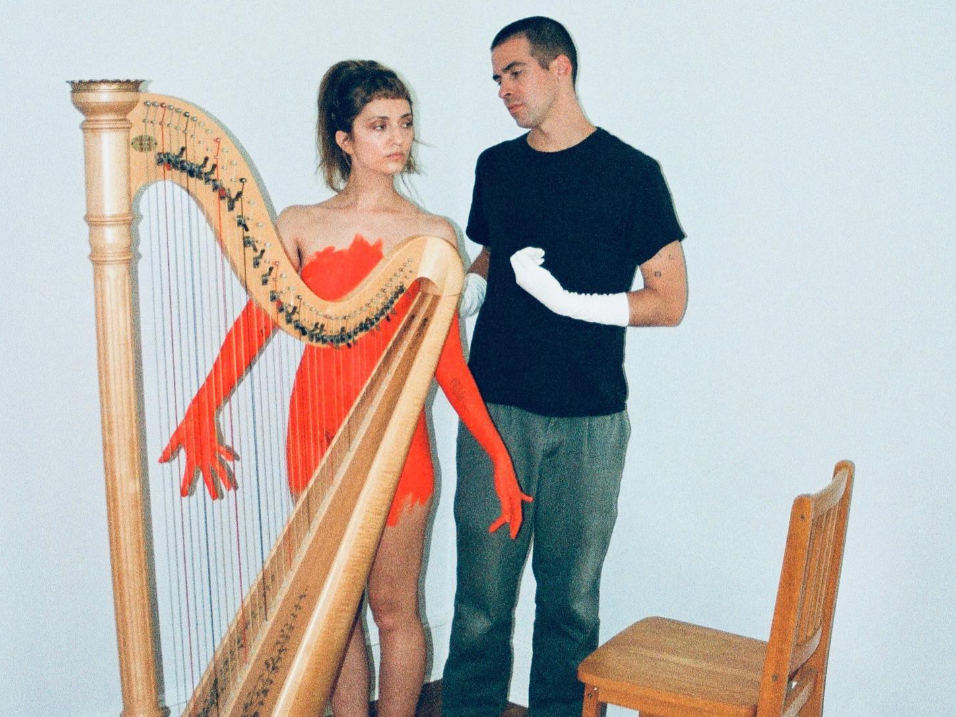
Donovan performs in the Brooklyn-based duo LEYA alongside vocalist and violinist Adam Markiewicz. Both are classically trained – she as an orchestral harpist and he with a background in jazz. Donovan plays harps made by the renowned manufacturer Lyon & Healy. What is remarkable, though, is that she deliberately detunes them. The resulting microtonal dissonances – inspired by James Tenney and Stravinsky – form the basis for many songs and mark a deliberate rejection of the traditional association with harmonious purity.
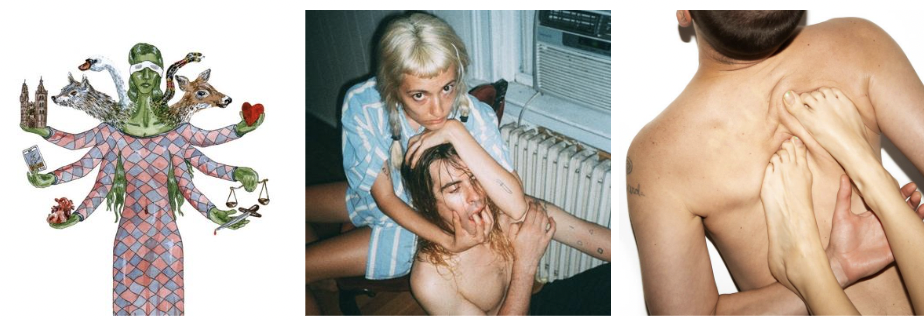
The duo has released three studio albums to date: The Fool (2018), Flood Dream (2020) and Eyeline (2022). All three records appear on NNA Tapes, a label dedicated to contemporary music beyond genre boundaries. On The Fool, there is even a track titled ‘Swan Lake’ – a possible allusion to Tchaikovsky’s piece with its iconic harp sounds. Here, however, the out-of-tune harp is accompanied by a cacophonous, almost ghostly violin and Markiewicz’s choral, monk-like vocals, producing slightly melodic yet ethereal sounds. Overall, the album is mostly instrumental, highly deconstructed, nightmarish and menacing, but also calm and experimental, with noise influences. In keeping with the album title, which evokes the Tarot card of ‘The Fool’, it explores new beginnings, taking risks and boundlessness – including in harp performance.
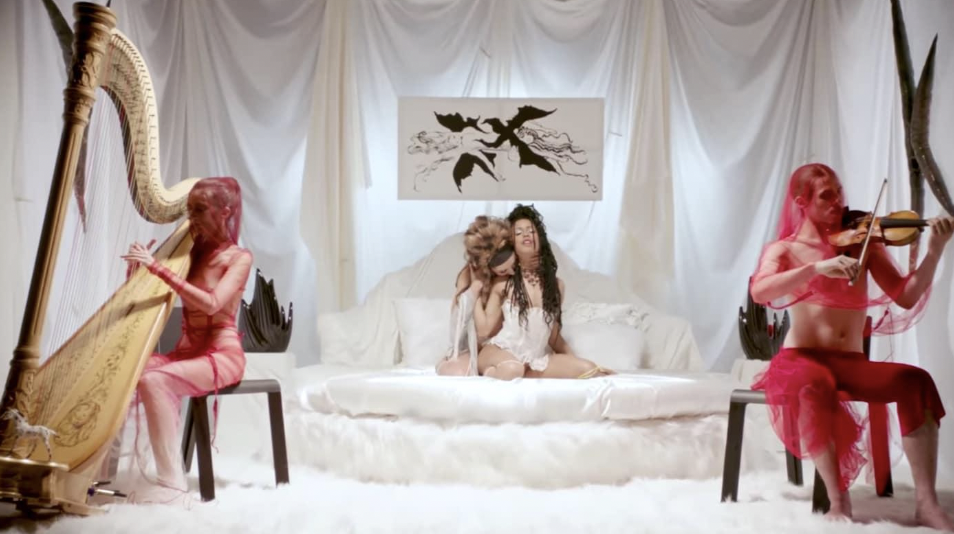
Flood Dream, on the other hand, has a more melodic feel and places greater emphasis on the evocative, emotional quality of Markiewicz’s vocals, which draw inspiration from the atmospheric, often obscure vocal textures of the Cocteau Twins. Musically, the album oscillates between heavy baroque timbres and harp glissandos – a subtle homage to both musicians’ classical training – combined with dreamlike forms of art-pop. A distinctive feature of Flood Dream is that three songs from the album – ‘Flesh’, ‘Flow’ and ‘Mariah’ – appear in Brooke Candy’s 2018 queer pornographic film I Love You, released on Pornhub. The 40-minute-long film combines an exaggerated, baroque and antique-style aesthetic with explicit scenes featuring lesbian, gay, and transgender couples. Donovan and Markiewicz are also partly present: clad in sheer fabrics, they sit with their instruments at the edge of the frame or in the background, holding them still. The music plays over the action, remaining off-screen, so that both the sounds of the explicit scenes and LEYA’s music are equally audible. The use of the harp in this queer pornographic context subverts its historically established symbolism in classical ‘high culture’ and the associated Christian ideals of purity and chastity.
In addition to these studio albums, the duo has also released several EPs (Angel Lust, 2019; I Forget Everything, 2024; I Remember Nothing, 2025), which further explore their experimental, deconstructive approach and their signature atmospheric, densely layered, slightly distorted sound. Particularly noteworthy is the EP Angel Lust (2019) – possibly also an allusion to the iconographic depiction of the harp with an angel – a collaboration with their long-time friend, singer and producer Eartheater. In addition, LEYA regularly collaborates with artists from various musical scenes. These include Ecco2k, Chanel Beads, Varg2™, and the metal band Liturgy. This clearly demonstrates how naturally the duo – and with it the harp – move between art music, pop, noise and other genres.
In all their albums, EPs and collaborations, the sound of the harp defies clear categorisation: it feels eerie and unsettling, yet magical and dreamlike, floating and still somehow abrupt. By featuring melodies with a sacred quality alongside ambient sounds, this creates an oscillation between classical sound and progressive interpretation.
The duo also plays with ironic depictions of the harp in their online presence. On Instagram, they regularly share harp memes that subvert stereotypical notions of the instrument, whilst placing it within a pop-cultural context.
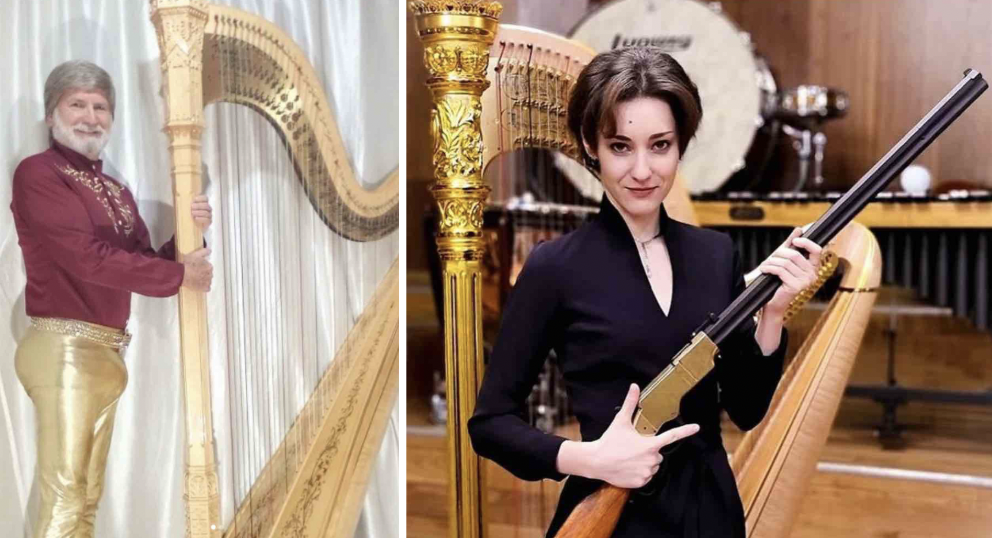
In the duo LEYA, Donovan presents the harp not as a heavenly instrument of purity, but as an experimental medium of sound that oscillates between classical music, the sacred, pop culture, and a queer context. Through her musical practice and visual staging, Donovan liberates the instrument from its elitist and often inaccessible milieu and opens it up to a broader, younger audience. The duo performs regularly in New York and occasionally tours internationally – as they did through Europe and the UK in 2025. Given their idiosyncratic soundscape, it is to be hoped that LEYA will continue to find new stages on which they can further liberate the harp from its traditional sphere and reimagine it in unexpected new contexts.