
Life 1 - Quadeca
By Terence Xu
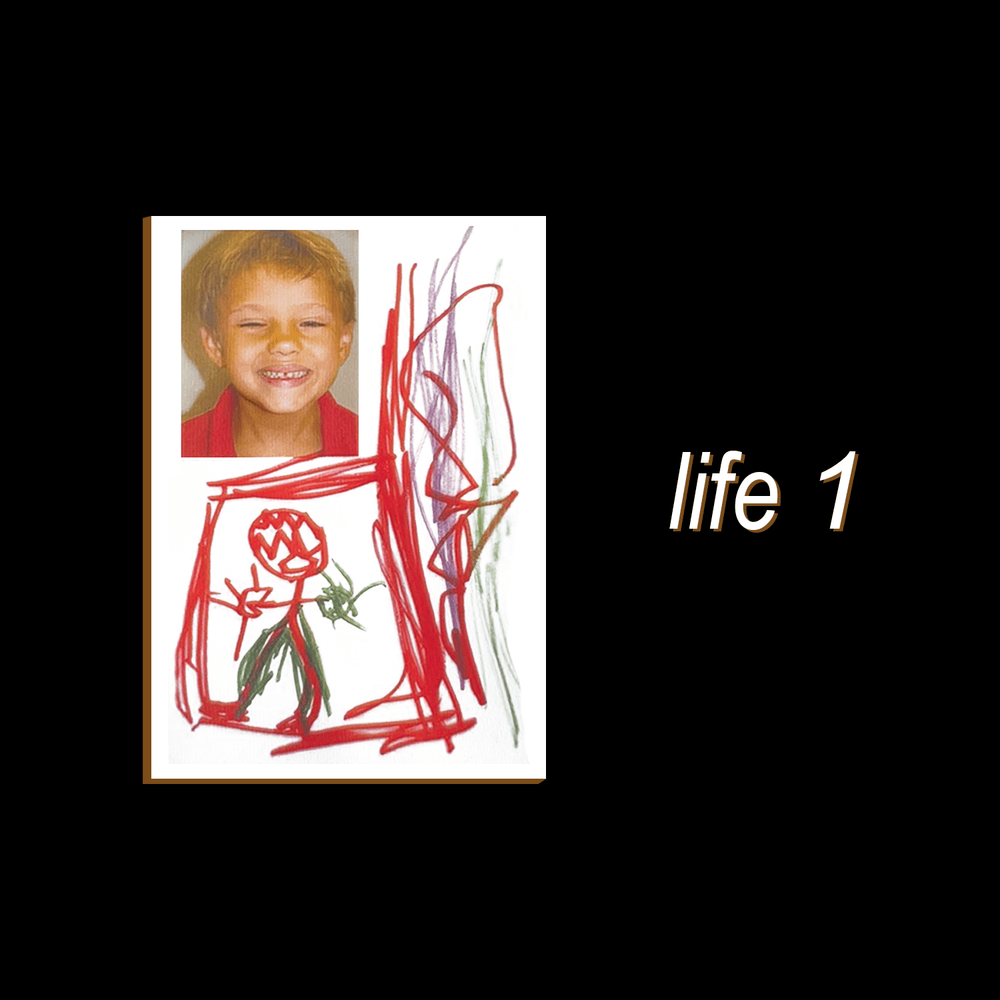
Life 1 stands as Quadeca’s fifth studio album, and possibly his last under the “Quadeca” pseudonym. Where his previous records leaned into maximalist world-building and tightly wound conceptual narratives, Life 1 is looser, campier, and more sonically fragmented, closer in spirit to his previously acclaimed LP Scrapyard in 2024, but with a brighter, more playful sense of theatricality. From the synth-y, dance-pop electronic single ‘Hell of a time’ to the slow, folk-like balladry of ‘Like you always do”’, every track seems to emerge from a different corner of Lasky’s musical talents and imagination. It embraces the feeling of an artist rummaging through his own musical instincts in real time, with the result feeling less like a traditional “Quadeca album” and more like a portrait of Benjamin Lasky himself. As a result, Life 1 is warm, absurd, self-conscious, whimsical, and introspective, while retaining the same technical brilliance of his production. Yet at times, that same looseness makes the record feel slightly awkward, messy and occasionally frustrating.
From a peculiar interlude about ‘CELERY’ to a song about life’s unknowingness through the lens of what a baby sees, Life 1 is woven together by a childlike sense of quirkiness and mundanity. ‘THE GAMBLER’ further highlights this sense of absurdity, telling a cheesy story of a family man who loses all his savings and is left with no one to confide in except an AI assistant. Convinced that everyone in his life has wronged him, he comes across as detached, delusional, and comically self-pitying. Yet, the track does not reduce him to a joke, but gives the character space to unravel, turning his absurdity into something strangely sympathetic and sad. By the time the song builds into its maximalist crescendo of rolling casino beeps, gospel swells, and crashing drums, reflecting the kind of overstimulated pace of modern life, and lives built on constant dopamine, validation and noise.
On the other hand, tracks like ‘Dark Magic’ or ‘Regular guy’ highlight the album’s newfound warmth and alternative R&B adjacent soundscapes. With Rhodes and keyboard chords swelling in and out of the production, these songs place a greater emphasis on Lasky’s vocal performances and songwriting abilities. While the vocals in the aforementioned tracks are mostly coherent and convincing, they point toward a larger inconsistency in the record. His voice is often intimate and emotionally direct, but it does not always carry the same emotional weight as the production surrounding it. His strained filtered screams, drawn out cadences and deliberate unpolished deliveries at times undercut the emotional weight his production is working so hard to build, pulling me out of moments that were otherwise beautifully arranged and compelling.
This is also where the album’s rawness becomes both its charm and major drawback. It is honest, with personality and humor, yet, it also makes the record feel uneven, with certain moments feeling underdeveloped or rough around the edges. At its best, tracks in the latter half of the album such as ‘Illusion of choice’ and ‘Good grief’ stands out as one of the strongest moments in the tracklist, where the rawness feels justified without feeling excessive. In the former, the song is embedded in a sampling and collage from a multitude of stock sounds from a Casio 2001 keyboard. From rolling stock sounds of claps, snares, rimshots and generic vocal samples, it mediates into this lush, introspective track about choice, regret and acceptance decorated with orchestral strings and glitchy piano accents. In the latter, the blown, toy-like plastic timbre that cuts through the track’s climax with its kazoo-like wheezing quality feels strangely well placed, adding depth to the overall epiphany and emotional release of the track. It is one of the clearest examples where the album’s rawness translates into emotional effectiveness rather than working against it.
Overall, with Life 1, Quadeca delivers yet another fresh sonic palette as he continues to experiment with different musical and production choices. While Life 1 is comparatively less compelling, magical and full to the other works in his discography, there is something admirable about how he continues to grow as an artist, even if it has felt uneven with this new album leaving more to be desired for him as an artist. However, perhaps that is what the title Life 1 itself suggests: not a grand philosophy or defined construction like his previous works, but a permission to be left unfinished, and to find meaning in the mess of simply being alive. It is fun, creative, ironic yet existential, dealing with themes of time, identity, connection and meaning as he closes out the album with the pondering of what he would do “in another life”.