FENIAN — Kneecap
By Evelyn Donnelly
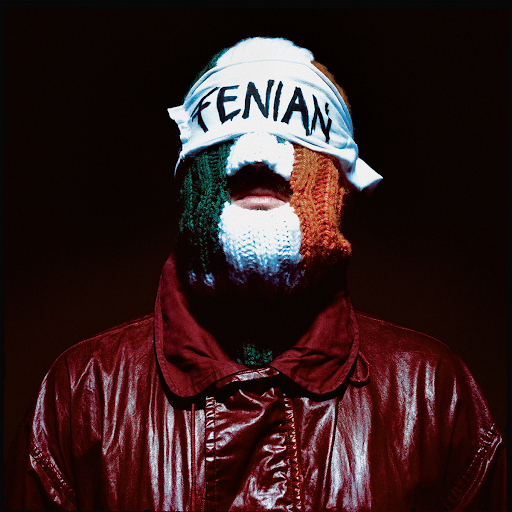
The second studio album from Irish hip-hop group Kneecap, FENIAN sees the trio at their most sonically sophisticated and politically empowered. Formed in 2017, Mo Chara, Móglaí Bap, and DJ Próvaí, have inspired much controversy and excitement within Ireland and the UK for their bold musical expression, sparking debates about the limits of free speech and the voicing of political opinions. Their music blends genres and languages, as Mo Chara and Móglaí Bap rap in both English and Irish, and focuses on the experiences of Belfast working class youth and Irish republicanism. The use of Irish in their songs feels so radical and innovative, as they have used hip-hop, a genre which commonly features political themes, for a vocalization of the Irish experience in a way never witnessed before. They have also spoken loudly for the freedom of Palestine, drawing connections between the oppression and genocidal erasure of the Palestinian people with that inflicted upon Ireland by England.
Over the years, Kneecap have been the targets of repression from the UK government; in May 2025 Mo Chara was charged under the Terrorism Act 2006 for apparently displaying a Hezbollah flag. After appearing in court, PMKeir Starmer tried to pressure Kneecap to cancel their Glastonbury performance, and the BBC refused to livestream their show when it went ahead at the festival. They were banned from entering Hungary for three years in 2025, and the Canadian government prevented the group from entering the country because of their supposed support for ‘terrorist’ organizations and to ‘protect’ Canada’s Jewish community. The strong international reaction to Kneecap’s political views have only strengthened fan’s support, and it feels like these attacks betray the corruption of these governments if anything. Kneecap stays undefeated by these attempts at censorship, and this is evident in FENIAN.
The album boasts some more fast-paced tracks with grinding beats and strong vocals, like ‘FENIAN’, ‘Headcase’, and ‘Smugglers and Scholars’. These three songs are some of my favorites on the album, featuring an intensity that feels empowering. On the other hand, they have included tracks like ‘Éire go Deo’ (which translates to ‘Ireland forever’), a melodic rallying call for the use of the Irish language that is the perfect gentle launch into the album. Ending with ‘Irish Goodbye’ featuring English performer and poet Kae Tempest, which feels melancholic but holds a brightness, and demonstrates solidarity amidst so much division. Representing their activism for Palestinian liberation is the track titled ‘Palestine’ featuring Ramallah-based rapper Fawzi. Other features include Norwegian synthpop group Casiokids and Irish folk singer Radie Peat. These features reflect all the genres they combine in this album, including acid house, trip-hop, dubstep, among others.
In the past, I have always loved Kneecap’s political messaging, use of Irish language, and harnessing of the hip-hop genre for an expression of Irish identity, but I have not always loved every song they put out. Sometimes this can prevent a listener from truly supporting the band. But while I like some tracks more than others, Kneecap have come a long way in their musical production, and the compilation of tracks feels harmonious and deliberate with every beat. I am super excited to see how the group progresses in their musical style and continue to experiment with their sound. As FENIAN represents, Kneecap seem nowhere near ready to back down, and they are louder, more energetic, and more confrontational than ever.