
Crystalpunk – Chalk
By Ian Glackin
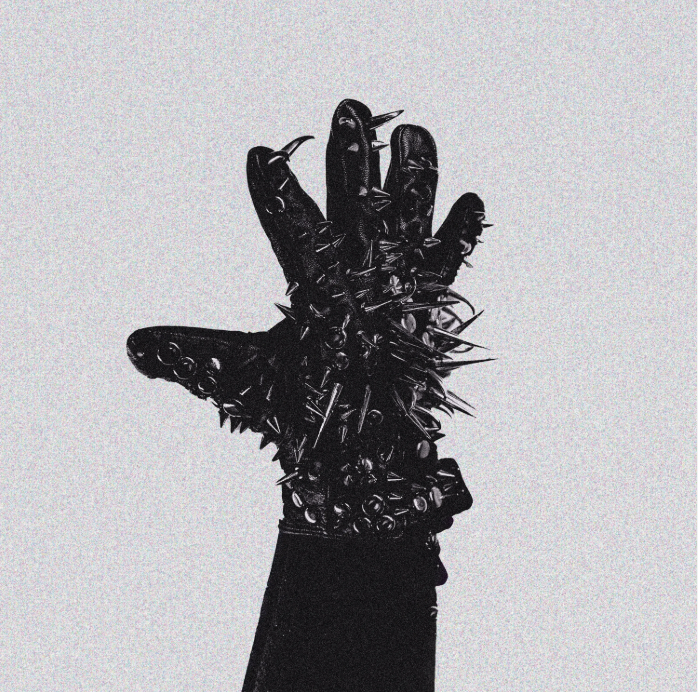
Crystalpunk, Belfast duo Chalk’s debut LP, succeeding their Conditions EP trilogy, is a refined vision, containing intentions that are made obvious to the listener and generally realized to new ceilings for the band. In their first long-format release, vocalist Rob Cullen and multi-instrumentalist Ben Goddard’s industrial and post-punk upbringings are on full display from the first moment. Former film students and roommates, Goddard and Cullen embarked on their musical journey in 2021, releasing singles ‘Them’ and ‘Velodrome’ in 2022. Chalk has become a representative for the young people of Belfast, who have grown up in the vacuum created by the violence of the Troubles. In an interview with The Guardian, Cullen reflects on the identity of his generation. “There’s no flag for people like us,” says Cullen, whose inspiration comes from “that feeling of being unclaimed on both sides.”
Crystalpunk is full of Cullen and Goddard’s identities. Songs like ‘Can’t Feel It Anymore’, about exploring sexuality, and ‘One-Nine-Eight-Zero’, about longing to return to the days of a complete life and a present father, elaborates on the theme of displacement that Cullen had referred to in his interview. Chalk’s ‘Béal Feirste’, the Irish name for Belfast, grapples with the complexities of the northern Irish identity. The song resents the clash between Protestantism and Catholicism: “Jesus Christ ain’t a savior of mine.” This theme is also touched on briefly in ‘Pain’; “She looked up and asked herself is there any God around?” The idea of finding identity in a crisis shines throughout Crystalpunk, but particularly strongly in songs like ‘Béal Feirste’ and ‘One-Nine-Eight-Zero’.
Crystalpunk is a mesh of industrial rock and EDM. As someone who listened to his father’s CD copy of The Matrix’s soundtrack while driving home from school, I definitely picked up on some influences from the great bands of the genre like Nine Inch Nails, Ministry, and K.M.F.D.M. Tracks like ‘Pain’ and ‘Skem’ put the duo’s instrumental capabilities on full display, and provoked my headbanging tendencies. Songs like ‘One-Nine-Eight-Zero’ and ‘I.D.C’ were definitely made with a different purpose. The choruses are more distinct and recognizable, and the music is less sonically ambitious and less aggressive. ‘Longer’ is a perfect example of an attainable harmony between these two styles of sound and structure – it has a heavy, guitar driven riff, but the rest of the song is relatively accessible. I enjoyed the industrial side of their sound more than the songs with pop elements (that’s my background talking), but it was for the most part all good.
Unfortunately, my least favorite song on Crystalpunk is the opening track ‘Tongue’. Chalk is definitely trying to blow the doors off the listener with ‘Tongue’, but I couldn’t get into the song. The lyrics are lazily suggestive, referring vaguely to sex in a really cliche way. I couldn’t help but think of the general trend beginning to take hold in mainstream music that consists of writing about sexual encounters and hookup culture in a basic and processed manner. As someone who grew up on rock and roll (50% of which is about sex), I have no problem with suggestive lyrics. However, I think artists should try to be clever when writing about sex, otherwise it becomes really uninteresting and provocative in a notably attention seeking way. While the lyrics of ‘Tongue’ are not meant to be the focus of the song, my mind immediately latched onto their simplicity. ‘Pain’ or ‘Skem’ would’ve been much stronger openers for the album.
Another qualm I have is that the two songs after this mediocre opener, ‘Pain’ and ‘Can’t Feel It’, have nearly identical beats and tempos. While I didn’t notice it in my first listen, relocating ‘Can’t Feel It’ would’ve definitely helped preserve its high energy and momentum. They are both good songs, but ‘Pain’ is a bit rockier, making it difficult for ‘Can’t Feel It’ to emerge from its shadow.
Crystalpunk’s themes are meaningful and direct when placed in the context of the duo’s regional identity, and as someone who has little affiliation with its core issues, I still enjoyed and understood the album. Chalk achieves a solid balance of subgenres across the world of digitalized music that cater to a larger audience, and while I do prefer their industrial roots to the poppier tinges in their music, I understand their intentions to diversify their sound. Chalk took very real issues and cast them on a canvas saturated with new and inspiring sounds, and I’m very excited to see where they go after Crystalpunk