
cASINO – rICHARD SALLIS
By Julius Swinfen-Cranney
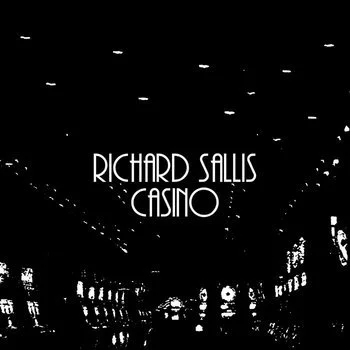
Adelaide-born artist Richard Sallis said that he wrote the songs for Casino at just 18 years old, during what he described as a period of homelessness, loneliness, and heartbreak. This context shapes the 2026 re-recording of a previously unreleased Casino, where a fuller band and expanded production don’t soften but amplify the teenage woe and theatrical impulse at the record’s core.
The first track, ‘Perfect Light’, clues you in to the album’s core tension between restraint and propulsion.The album kicks off with a calming organ, which continues to underlay the rest of the track, giving the song a pure and penitent feel. You’re lulled in, then BAM! You’re hit with high-tempo, insistent drums, bringing momentum to the otherwise soft melodies – they’re tight but never bombastic. Because the percussion remains controlled throughout the album, Sallis allows the surrounding arrangements to grow denser without losing direction. As we move to ‘Feels’, we are introduced to brass, acoustic guitars and a bouncy piano line. The tempo is fast and the space is filled, but the softness isn’t ever lost on us.
So, what keeps all these dense arrangements from making everything seem overwhelming? It all comes down to Sallis’ vocals. They’re sung with a measured clarity that grounds the album, even as arrangements swell and shift. He often maintains a mid-register, with occasional moments of falsetto or grit. On album highlight ‘Mandolin Gun’, Sallis dips in between his usual mid-range voice and an angsty, gritty performance. The mix features a mandolin that evokes a folky feel and slightly heavier electric guitars than we’d been used to up to this point. This contrast gives the track a sharper sense of identity that isn't found on other tracks. By comparison, the rest of Casino occasionally feels in need of slightly more variety.
Despite the lack of variety, Sallis’ lyrics are introspective. They have a quality of child-like naivety that gives the songs warmth while acknowledging the flawed decisions that shaped who Sallis was at the time. In the final track ‘Yesteryear’, Sallis paints the picture of dressing up in costumes and drinking with the subject of the song, claiming these were the best days he’s lived. He later returns to the same spots and pessimistically says “It's funny how over time everything will change / It's funny how over time all you love just goes away.” There’s no mistaking how Sallis feels in this simple prose. Another small but effective detail is the choice to reverse the drums on this track, as it just makes sense on a song that ‘goes back through time’. There’s also a bittersweetness to the outro: “Everyone's moved on now / I don't miss it anymore.” This reads as an acceptance of adulthood rather than a lament for childhood, an appropriate final sentiment of Casino.
The tone of the record can best be described as uncertainly optimistic. The very notion of the (almost) title track, ‘You’re a Casino’, evokes ideas of uncertainty and chance. It hints at lyrics with emotional risk that don’t shy away from ambiguity, like “I could lose everything I have to you / Or you could double it.” Casino sounds like realisation of a long-held idea: a complete, fully articulated version of Sallis’ teenage vision. In that sense, it works as a coming-of-age sophomore project. It slots neatly into Sallis’ growing catalogue, which, so far, has favoured emotional and thematic depth over surface-level wish-wash.
His debut album Felix followed a similar internal arc to Casino, but differs by outlining Sallis’ journey into impending fatherhood and dipping its toes into a wide range of sonic and conceptual territories. Felix’s strengths lay in the fact that each, quite long, song felt like its own emotional space, but Casino, by comparison, feels like it is more unified as an entire project, and while Casino builds on in Felix’s emotional depth, it somewhat lacks in its song-to-song diversity. This is not necessarily to Casino’s detriment – its forward-driving pace and dense arrangements reinforce a sense of cohesion. But this does beg the question: does Casino succeed because of this single-minded momentum, or, ultimately, is it held back by it?
So if Casino sounds a little single-minded, I think it was always going to. It was a project written in Sallis’ youth and revisited to give proper scale and love. His objective was to show us a slice of the hurt and loneliness of an era of his life, and in that, he triumphs.